

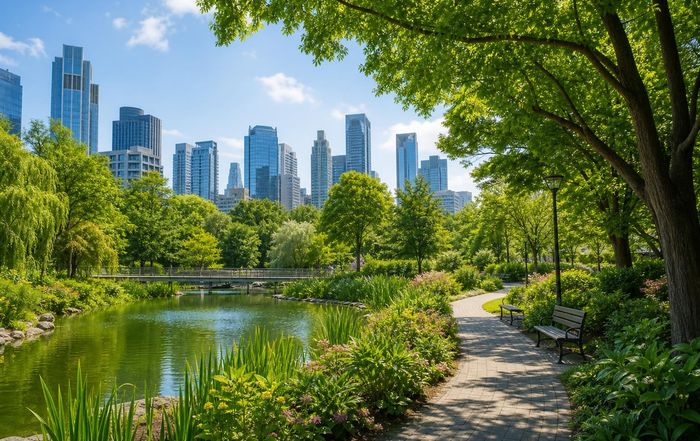
Why Urban Green Spaces Matter
Urban Living at a Turning Point
As cities from New York to Singapore continue to densify and vertical skylines dominate the visual narrative of modern life, the quiet power of urban green spaces has become impossible to ignore. For the kind and loving wellness seeking readers of wellnewtime.com, who consistently seek a balance between performance and wellbeing, the story of parks, pocket gardens, green roofs and urban forests is no longer a niche environmental concern; it is a central business, health and lifestyle strategy shaping how people live, work and thrive in the world's most dynamic metropolitan regions.
The global urban population now exceeds 4.4 billion people, according to data from the United Nations Department of Economic and Social Affairs, and is projected to keep rising, particularly in Asia, Africa and South America. As cities in the United States, United Kingdom, Germany, Canada, Australia, France, Italy and beyond grapple with congestion, climate risk and rising mental health concerns, the presence, quality and accessibility of green spaces have become critical indicators of a city's resilience and its commitment to human-centered development. Urban parks, tree-lined streets, riverside promenades and greenways are increasingly understood not as amenities but as essential infrastructure, as vital to public health as hospitals and as fundamental to economic competitiveness as digital connectivity.
For wellnewtime.com, which daily explores the interconnection of wellness, health, fitness, lifestyle and environment, urban green spaces sit at the crossroads of all these domains. They are physical expressions of the values that shape modern cities: how they prioritize people over traffic, long-term sustainability over short-term gains, and shared public value over private convenience. Understanding why they matter, and how they can be designed and managed for maximum impact, has become a strategic priority for policymakers, business leaders, urban planners and citizens alike.
The Health Imperative: Green as Urban Medicine
The health case for urban green spaces is now supported by a robust and growing body of evidence. Organizations such as the World Health Organization (WHO) have repeatedly highlighted that exposure to nature in cities is associated with lower levels of stress, improved cardiovascular health, and better overall life satisfaction, and cities that integrate parks and green corridors into their development strategies are effectively investing in preventative healthcare. Readers can explore the broader context of urban health on the WHO urban health pages, where green infrastructure is consistently framed as a health determinant rather than a decorative feature.
In North America and Europe, longitudinal studies have shown that residents living near high-quality green spaces tend to have lower rates of obesity, hypertension and type 2 diabetes, even after controlling for income and education. The Centers for Disease Control and Prevention (CDC) notes that easy access to safe, attractive parks significantly increases physical activity levels, particularly among children and older adults, and that proximity encourages daily habits rather than sporadic exercise; more details on this relationship can be found through the CDC's physical activity resources. For a business audience, this translates directly into reduced healthcare costs, lower absenteeism and a healthier, more productive workforce.
In fast-growing Asian cities such as Seoul, Bangkok, Singapore and Tokyo, where long working hours and high population density create intense psychological pressure, urban green areas function as critical mental health buffers. Research highlighted by the American Psychological Association has linked time in nature with reduced anxiety, improved mood and enhanced cognitive performance, and city governments are increasingly incorporating this evidence into their planning frameworks; those interested can learn more about nature and mental health. For wellnewtime.com readers focused on personal resilience and mindfulness, the message is clear: regular contact with green spaces is not an optional luxury but a strategic habit that supports mental clarity, emotional balance and long-term wellbeing.
Fitness, Performance and Everyday Movement
Urban green spaces are also powerful enablers of active lifestyles, particularly in cities where car dependence, air pollution and limited time make traditional gym-based routines difficult to sustain. Parks, riverside trails and urban forests create low-barrier environments for walking, running, cycling, yoga and functional training, turning everyday movement into a natural part of city life rather than an isolated fitness event. For readers exploring fitness strategies that integrate seamlessly with demanding careers, the presence of a well-designed park within a ten-minute walk can make the difference between a sedentary week and a consistently active routine.
Organizations such as Sport England and ParticipACTION in Canada have consistently emphasized that people are more likely to be physically active when they have safe, attractive and accessible outdoor environments, and these insights have influenced urban design guidelines in cities from London and Manchester to Toronto and Vancouver. The World Economic Forum has also highlighted the economic value of active cities, underscoring that investments in urban green and blue infrastructure pay dividends in productivity and reduced healthcare costs; readers interested in this economic framing can explore the World Economic Forum's work on healthy cities.
In global hubs such as New York, Berlin, Sydney and Amsterdam, the integration of greenways and bike-friendly infrastructure has created new patterns of active commuting, allowing residents to combine transportation, exercise and mental decompression in a single daily ritual. This aligns closely with the holistic approach that wellnewtime.com advocates, where wellness is not confined to specific hours or locations but woven into the fabric of everyday urban life. For companies looking to enhance employee wellbeing and retention, proximity to parks and green corridors has become a tangible asset in location decisions and workplace design.
Mindfulness, Mental Health and the Need for Quiet
Beyond physical health and fitness, urban green spaces provide something increasingly scarce in modern cities: accessible, restorative quiet. In 2026, as digital overload, constant notifications and high-intensity work cultures continue to blur the boundaries between professional and personal time, the psychological value of a tree-lined path, a secluded bench or a waterside garden has grown significantly. These spaces allow city dwellers to disconnect from screens, reconnect with their senses and cultivate a more grounded presence in their daily routines.
The concept of "attention restoration," pioneered by environmental psychologists and now widely recognized in mental health research, suggests that time spent in nature helps replenish cognitive resources depleted by the demands of focused work. Institutions such as Harvard Medical School have published guidance on the benefits of nature for stress reduction and mental clarity, providing practical recommendations for integrating outdoor time into busy schedules; readers can learn more about nature and stress reduction. For wellnewtime.com readers exploring mindfulness practices, urban parks can serve as accessible meditation spaces, enabling short, regular sessions that fit into lunch breaks, commute transitions or early morning routines.
In cities across Scandinavia, including Sweden, Norway, Denmark and Finland, the cultural tradition of valuing outdoor time, even in colder months, has shaped urban planning that prioritizes green areas as everyday extensions of living space. The European Environment Agency has documented how such design choices contribute to higher reported life satisfaction and lower stress levels in many European cities, reinforcing the connection between green infrastructure and societal wellbeing; further context is available through the EEA's urban environment resources. For global business leaders, this underscores that investments in urban green spaces are not only environmental or aesthetic decisions but strategic interventions in mental health and social cohesion.
Climate Resilience and Environmental Performance
Urban green spaces are also critical tools in responding to the accelerating impacts of climate change, a reality that cities on every continent are now confronting more directly. Heatwaves in Europe, wildfires in North America, flooding in Asia and water stress in Africa and Australia have made climate resilience a core component of urban policy, and green infrastructure has emerged as one of the most effective and adaptable solutions. Trees, parks and green roofs lower surface and air temperatures, reduce the urban heat island effect, manage stormwater, improve air quality and support biodiversity in otherwise heavily built environments.
The Intergovernmental Panel on Climate Change (IPCC) has repeatedly emphasized the importance of nature-based solutions in urban adaptation strategies, noting that green spaces can significantly reduce climate-related risks when integrated into broader planning frameworks; those interested can explore IPCC reports on cities and climate change. In cities such as Rotterdam, Copenhagen, Singapore and Melbourne, innovative green-blue infrastructure projects combine parks, water plazas and wetlands to absorb excess rainfall, prevent flooding and create attractive public spaces that deliver both environmental and social value.
Organizations like The Nature Conservancy have demonstrated how urban trees and parks can improve air quality by filtering pollutants, which is particularly relevant in rapidly growing cities across China, India, Brazil and South Africa, where air pollution remains a major health challenge; readers can learn more about urban nature-based solutions. For wellnewtime.com, which covers environmental trends alongside health and business, this integration of ecology and urban design represents a powerful convergence of interests: what is good for the climate is increasingly also good for human wellbeing, corporate strategy and city competitiveness.
Business, Brands and the New Urban Value Proposition
The business implications of urban green spaces have become more visible in 2026, as companies in sectors from real estate and hospitality to technology and consumer goods recognize that proximity to nature is now a differentiating factor for talent attraction, customer loyalty and brand reputation. Office developments that integrate parks, terraces and biophilic design elements are commanding premium rents, and employees are actively seeking workplaces that support movement, daylight and access to greenery. For readers following business trends and brands on wellnewtime.com, this shift signals a deeper realignment between corporate strategy and urban wellbeing.
Major organizations such as Microsoft, Google and Salesforce have invested heavily in campuses and urban offices that blur the boundaries between indoor and outdoor space, incorporating gardens, green roofs and walking paths as core design features rather than afterthoughts. The International WELL Building Institute (IWBI), through its WELL Building Standard, has codified many of these practices, providing a framework that links design decisions to measurable health and wellbeing outcomes; interested readers can explore the WELL Building Standard. For multinational firms competing for highly skilled talent in cities like London, Berlin, Toronto, Singapore and Sydney, such investments are increasingly viewed as essential components of employer value propositions.
From a brand perspective, alignment with urban greening initiatives allows companies to demonstrate authentic commitment to sustainability, community engagement and public health. Partnerships between corporations, city governments and non-profit organizations such as World Wildlife Fund (WWF) and C40 Cities are funding tree-planting campaigns, park renovations and green corridor projects that deliver visible, shared benefits; readers can learn more about C40's work on green and thriving cities. For a business audience, these collaborations illustrate how environmental and social responsibility can translate into concrete, place-based actions that resonate with employees, customers and local communities.
Lifestyle, Travel and the Experience of Green Cities
Urban green spaces also shape how residents and visitors experience cities on a daily basis, influencing decisions about where to live, work, travel and invest. For wellnewtime.com readers interested in lifestyle and travel, the rise of "green city tourism" reflects a shift in preferences toward destinations that offer both cultural vibrancy and easy access to nature. Cities such as Vancouver, Zurich, Stockholm, Barcelona, Auckland and Wellington consistently rank high in liveability indexes not only because of their infrastructure and services, but also because of their extensive networks of parks, waterfronts and natural reserves.
Organizations like Mercer and The Economist Intelligence Unit have long included environmental quality and access to green spaces in their global liveability rankings, which influence corporate relocation decisions, expatriate assignments and investment flows; readers can explore broader liveability discussions via the OECD's work on cities and regions. For individuals and families deciding between urban neighborhoods in New York, London, Berlin, Paris, Toronto or Sydney, factors such as park proximity, tree canopy coverage and walkable green routes are increasingly weighted alongside school quality and commute times.
The hospitality industry has also recognized the value of urban nature, with hotels, co-living spaces and short-term rentals in cities from Tokyo to Cape Town emphasizing garden access, rooftop terraces and nearby parks in their offerings. Wellness-focused travel experiences now commonly include guided runs through city parks, outdoor yoga sessions and nature-based cultural tours, reflecting a convergence between tourism, fitness and mindfulness. This aligns closely with the editorial direction of wellnewtime.com, where urban travel is often framed not only as exploration but as an opportunity to recalibrate health, habits and perspective.
Equity, Inclusion and the Politics of Green
Despite the many documented benefits of urban green spaces, access remains deeply unequal within and between cities. In 2026, one of the most urgent challenges for policymakers and civic leaders is ensuring that parks and green infrastructure are distributed fairly, rather than concentrated in affluent districts or used as catalysts for exclusionary development. Studies by organizations such as UN-Habitat and the World Resources Institute have shown that low-income communities and marginalized groups often have less access to high-quality green spaces, even though they tend to face higher levels of pollution, heat stress and health vulnerabilities; readers can learn more about inclusive urban development.
In United States cities like Los Angeles, Chicago and Houston, as well as in London, Paris, Johannesburg and São Paulo, debates around "green gentrification" highlight the risk that new parks and greenways can inadvertently drive up property values and displace long-standing communities if not accompanied by inclusive housing and economic policies. The World Bank has emphasized that urban greening must be integrated with social protection and affordable housing strategies to deliver equitable outcomes; readers can explore this perspective through the World Bank's work on sustainable cities. For wellnewtime.com, which engages with world developments and news from a wellbeing lens, this underscores that the true value of urban green spaces can only be realized when they are accessible, safe and welcoming for all residents, regardless of income, age, gender or background.
Inclusive design practices, co-creation with local communities and long-term stewardship models are emerging as best practices in cities committed to equitable greening. Community gardens, participatory budgeting for park improvements and youth employment programs linked to urban forestry demonstrate how green spaces can become platforms for social cohesion, skills development and local empowerment. This intersection of environment, jobs and social equity reflects a broader shift toward regenerative urban development, where green spaces are not only places of leisure but engines of opportunity.
Innovation, Data and the Future of Urban Green
The next decade is likely to see an acceleration of innovation in how urban green spaces are planned, monitored and experienced. Advances in geospatial analytics, remote sensing and artificial intelligence are enabling city planners and researchers to map tree canopies, heat islands and park accessibility with unprecedented precision, guiding investment decisions and policy interventions. Organizations such as NASA and the European Space Agency (ESA) are providing satellite data that helps cities track environmental changes over time, while local governments and start-ups are developing digital tools that allow residents to understand and engage with their urban ecosystems; readers can explore ESA's urban environment work.
In parallel, new materials and design approaches are emerging that expand the possibilities for greening dense urban environments, from modular green walls and lightweight rooftop gardens to multifunctional public spaces that combine flood protection, recreation and biodiversity. The Ellen MacArthur Foundation and similar organizations are promoting circular economy principles that encourage the reuse of materials and the integration of nature into urban systems, supporting more resilient and resource-efficient cities; readers can learn more about circular cities. For wellnewtime.com, which closely follows innovation in wellness, environment and business, these developments illustrate how technology and nature can work together rather than in opposition.
At the experiential level, augmented reality, digital wayfinding and data-driven storytelling are beginning to transform how people interact with parks and green corridors, offering educational overlays, guided mindfulness experiences and real-time information on air quality, noise and biodiversity. While the core value of green spaces remains rooted in their ability to offer respite from digital overload, carefully designed technological enhancements can help deepen understanding, foster stewardship and connect individual experiences to broader environmental and social narratives.
A Strategic Agenda for Cities and Citizens
The case for urban green spaces is no longer merely aspirational or aesthetic; it is strategic, evidence-based and multidimensional. For city governments, integrating parks, trees and green infrastructure into urban planning is a matter of public health, climate resilience, economic competitiveness and social cohesion. For businesses and brands, aligning with urban greening efforts offers a tangible way to demonstrate commitment to employee wellbeing, sustainability and community value. For individuals and families, especially those navigating high-pressure careers in global cities, regular engagement with urban nature is a practical, accessible and powerful tool for maintaining physical health, mental clarity and emotional balance.
For wellnewtime.com, whose often daily visitors and readers span North America, Europe, Asia, Africa, South America and Oceania, the message is consistent across geographies: the future of healthy, liveable and prosperous cities depends on how seriously they take their green spaces today. Whether through advocating for park investments in local councils, choosing neighborhoods and workplaces that prioritize greenery, supporting brands that contribute to urban greening, or simply committing to daily walks in nearby parks, every stakeholder has a role to play in shaping this future.
As urbanization continues to define the 21st century, the presence of trees, gardens and natural landscapes within city boundaries will increasingly be seen as a measure of collective wisdom and long-term vision. The cities that thrive will be those that recognize urban green spaces not as leftover land or optional embellishments, but as core infrastructure for human flourishing. In that recognition lies an opportunity for individuals, businesses and governments to align their interests around a shared, tangible and deeply human goal: cities where people and nature can grow, recover and succeed together.