

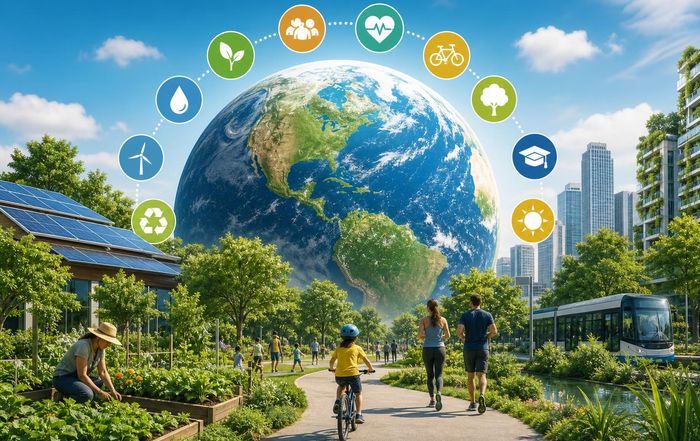
World Trends Influencing Top Healthy Communities
A New Global Vision for Healthy Communities
The idea of a "healthy community" has expanded far beyond the traditional focus on hospitals, clinics and individual medical care, evolving into a holistic, systems-based vision that connects physical health, mental wellbeing, environmental sustainability, social cohesion and economic resilience across cities, towns and rural regions worldwide. As wellnewtime.com continues to explore the emerging new almost trending intersection of wellness, health, lifestyle and innovation, the platform occupies a distinctive position in helping leaders, professionals and citizens understand how global trends are reshaping everyday life from New York to Singapore, from London to Sydney, and from Berlin to São Paulo.
Healthy communities are now understood as dynamic ecosystems in which wellness, prevention, inclusive growth and environmental stewardship are treated as mutually reinforcing priorities rather than competing agendas. International institutions such as the World Health Organization (WHO) have emphasized that the social and environmental determinants of health can be as important as clinical care, which is why many governments and businesses are now rethinking how they design neighborhoods, workplaces and digital experiences. Learn more about how social determinants shape modern health strategies on the WHO website.
At the same time, a powerful cultural shift is underway: individuals are increasingly acting as informed "co-designers" of their health, seeking credible guidance on wellness, fitness, mindfulness and lifestyle choices from trusted sources. This is where wellnewtime.com has become a reference point, curating insights that connect personal wellbeing with broader economic and environmental trends, and translating global developments into practical perspectives for readers in the United States, United Kingdom, Germany, Canada, Australia, Asia and beyond.
The Rise of Preventive Wellness and Integrated Health
One of the most significant trends influencing healthy communities in 2026 is the decisive global move from reactive treatment to proactive prevention, with governments, insurers, employers and citizens increasingly recognizing that the most sustainable health systems are those that keep people well for as long as possible. Public health authorities and research institutions have consistently shown that lifestyle-related chronic diseases, such as cardiovascular disease, type 2 diabetes and certain cancers, can be significantly reduced through long-term changes in diet, physical activity, stress management and sleep hygiene. Readers can explore evolving recommendations on preventive care and screening through the U.S. Centers for Disease Control and Prevention.
Across North America, Europe and Asia, health systems are progressively integrating digital tools, community-based services and personalized risk assessments to identify issues earlier and support healthier behaviors. This convergence of clinical care and lifestyle coaching has created new opportunities for platforms like wellnewtime.com to guide individuals through the complex landscape of wellness information, highlighting evidence-based resources such as NHS guidance on healthy living in the United Kingdom or Health Canada's recommendations for disease prevention and health promotion.
Within this preventive paradigm, the boundaries between "health" and "wellness" are dissolving. Medical professionals increasingly collaborate with nutritionists, fitness trainers, mindfulness instructors and mental health specialists to design comprehensive programs that address both physical and psychological resilience. On wellnewtime.com, readers can explore this more unified view of wellbeing through dedicated sections such as health and wellness, which examine how clinical evidence, lifestyle habits and community infrastructure interact to shape long-term outcomes.
Fitness as a Community Infrastructure, Not Just a Personal Choice
Fitness has evolved from a primarily individual pursuit into a critical pillar of community design and economic development, as cities and regions recognize that active populations are more productive, more innovative and less burdened by chronic disease. Urban planners, public health experts and business leaders are collaborating to create environments in which physical activity is embedded into daily life, through walkable neighborhoods, cycling networks, accessible public transport and inclusive recreational spaces. The World Economic Forum has highlighted how active cities contribute to competitiveness and resilience; readers can learn more about sustainable urban development and its links to health and productivity.
In countries such as the Netherlands, Denmark and Sweden, long-standing investments in cycling infrastructure and public parks have become global benchmarks for other regions seeking to encourage everyday movement, while cities in the United States, Canada, Australia and Singapore are rapidly expanding green corridors and mixed-use developments that support walking and outdoor exercise. For professionals and citizens interested in how fitness intersects with urban planning, technology and workplace culture, the fitness section of wellnewtime.com offers a curated lens on emerging practices worldwide.
At the same time, digital fitness ecosystems have matured significantly since the early surge of connected devices, with wearables, smart clothing and AI-driven platforms now providing highly personalized training plans, recovery insights and health alerts. Organizations such as Apple, Garmin and Samsung continue to refine their health tracking capabilities, while research institutions like the Mayo Clinic explore how digital monitoring can support early detection of cardiovascular and metabolic issues; further information on digital health innovation can be found via the Mayo Clinic's technology initiatives. These developments are transforming fitness from a sporadic activity into an integrated, data-informed component of everyday life, reinforcing the broader shift toward community-wide wellbeing.
Mindfulness, Mental Health and the New Normal of Psychological Resilience
The past decade has witnessed a profound normalization of mental health conversations, driven by social movements, corporate leadership and the growing evidence base showing that psychological wellbeing is inseparable from physical health and community stability. In 2026, mindfulness and mental health are no longer viewed as niche interests but as foundational elements of healthy societies, influencing education systems, workplace policies and public health strategies across continents.
Global organizations such as UNICEF and the OECD have documented the mental health impacts of social and economic disruptions on young people, emphasizing the need for early intervention, emotional literacy and supportive school environments. Readers can explore international perspectives on youth mental health through UNICEF's dedicated resources. Meanwhile, employers in sectors ranging from finance and technology to manufacturing and public services are investing in comprehensive wellbeing programs that include mindfulness training, counseling access and flexible work arrangements, recognizing that psychological resilience is essential for sustained performance and innovation.
Within this context, wellnewtime.com has cultivated a specific focus on mindfulness as a practical bridge between individual self-care and collective resilience. The platform's mindfulness section examines techniques such as meditation, breathwork, digital detox practices and mindful movement, while also exploring how these tools are being integrated into schools, prisons, hospitals and corporate leadership development programs. Leading research centers, including those at Harvard University and University of Oxford, have contributed to a robust evidence base on the benefits of mindfulness for stress reduction, attention, emotional regulation and even immune function; readers can delve into scientific overviews through resources such as the Harvard Health Publishing portal.
The rise of digital mental health platforms, teletherapy and AI-assisted coaching has further expanded access to psychological support, particularly in regions where traditional services are limited. However, this expansion also raises important questions about data privacy, ethical design and the need for human oversight, issues that healthy communities must address through robust governance and transparent standards.
Travel, Mobility and the Wellness-Oriented Journey
Travel patterns have undergone a structural transformation, with wellness and health considerations now deeply embedded in how individuals and organizations plan journeys for leisure, work and education. After years of heightened health awareness, travelers from the United States, Europe, Asia and beyond are prioritizing destinations, accommodations and experiences that support restoration, movement, connection with nature and cultural authenticity, rather than solely focusing on consumption or status.
Leading industry bodies such as the World Travel & Tourism Council (WTTC) have documented the rise of wellness tourism, regenerative travel and nature-based experiences, which are reshaping investment in hospitality, transportation and local development projects. Readers interested in these shifts can learn more about global travel and tourism trends and their implications for communities that depend on visitor economies. Simultaneously, public health agencies and border authorities have established more sophisticated health protocols, digital documentation systems and emergency response frameworks to ensure that mobility does not compromise community safety.
For wellnewtime.com, travel is not merely about destinations but about the quality of experience and its impact on wellbeing. The platform's travel coverage highlights retreats, urban escapes and cross-border initiatives that combine physical activity, mindfulness, cultural immersion and environmental respect. From thermal spa traditions in Germany and Switzerland to forest bathing in Japan and South Korea, and from yoga retreats in Thailand and Bali to eco-lodges in Costa Rica and New Zealand, the global map of healthy travel is expanding, offering new models for how communities can host visitors while preserving local ecosystems and cultural integrity.
Beauty, Self-Care and the Science of Healthy Appearance
The global beauty industry has experienced a paradigm shift, moving from superficial aesthetics and one-size-fits-all marketing to a more science-driven, health-centric and inclusive approach that emphasizes skin health, microbiome balance, clean ingredients and mental wellbeing. In 2026, healthy communities are increasingly defined not only by low disease rates but also by how they support individuals in feeling confident, respected and authentic in their appearance, regardless of age, gender, ethnicity or body type.
Scientific advances in dermatology, cosmetic chemistry and biotechnology have fueled the rise of personalized skincare, nutraceuticals and non-invasive treatments, often supported by rigorous clinical research. Institutions such as the American Academy of Dermatology provide accessible information on skin health, sun protection and evidence-based treatments, which can be explored through their public resources. At the same time, regulatory bodies in the European Union, United States, United Kingdom and other regions are tightening standards around ingredient safety, labeling transparency and environmental impact, encouraging brands to adopt more responsible practices.
Within this evolving landscape, wellnewtime.com offers readers an integrated perspective on beauty as a component of holistic wellbeing, linking external appearance to nutrition, sleep, stress management and mental health through its dedicated beauty section. This approach aligns with broader movements toward body positivity, age inclusivity and cultural diversity, which are helping communities move away from narrow, often harmful beauty ideals toward a more human-centered understanding of self-care and presentation.
Business, Brands and the Economics of Healthy Communities
Healthy communities are not only a social aspiration but also a powerful economic imperative, as businesses across sectors recognize that long-term profitability and brand equity depend on the wellbeing of employees, customers, suppliers and local residents. In 2026, corporate strategies increasingly integrate health, wellness and sustainability metrics alongside traditional financial indicators, a shift reinforced by investors, regulators and consumers who expect organizations to demonstrate genuine social responsibility.
Global frameworks such as ESG (Environmental, Social and Governance) reporting and the UN Sustainable Development Goals (SDGs) have accelerated this transformation, encouraging companies to measure their impact on health, equity and the environment. The United Nations Global Compact provides guidance for businesses on aligning with these goals, which can be explored in greater depth through its resources on sustainable business practices. Many leading organizations are now investing in workplace wellness programs, mental health support, flexible work designs and community partnerships, viewing these initiatives as essential for attracting talent, reducing turnover and fostering innovation.
For readers of wellnewtime.com, the business and brands sections offer insight into how companies in sectors such as technology, hospitality, consumer goods, healthcare and finance are integrating wellness into products, services and corporate cultures. From fitness-focused corporate campuses in the United States to mental health-first leadership training in the United Kingdom and Germany, and from inclusive hiring policies in Canada and Australia to social enterprises in South Africa and Brazil that address local health disparities, the emerging narrative is clear: businesses that invest in healthy communities are better positioned to thrive in a volatile global environment.
Lifestyle, Environment and the Climate-Health Nexus
Lifestyle choices and environmental conditions are now understood to be deeply intertwined, with climate change, air quality, biodiversity loss and resource scarcity exerting direct and indirect effects on community health. The Intergovernmental Panel on Climate Change (IPCC) and the Lancet Countdown on Health and Climate Change have repeatedly highlighted how heatwaves, pollution, extreme weather events and vector-borne diseases threaten wellbeing, particularly among vulnerable populations in Asia, Africa and South America. Readers can learn more about climate impacts on health through the IPCC's assessments.
In response, many cities and regions are pursuing integrated strategies that link climate mitigation and adaptation with public health goals, such as expanding urban green spaces to reduce heat islands, promoting active transport to cut emissions and improve fitness, and redesigning housing to enhance energy efficiency and indoor air quality. These initiatives align closely with the interests of wellnewtime.com readers, who are increasingly seeking guidance on how to live sustainably without compromising comfort or convenience. The platform's environment section and lifestyle coverage explore how individuals and communities can adopt low-carbon, health-promoting habits, from plant-forward diets and reduced food waste to conscious consumption and nature-based recreation.
International organizations such as the World Resources Institute (WRI) and UN Environment Programme (UNEP) provide robust analysis and practical tools for policymakers, businesses and citizens seeking to align environmental stewardship with health outcomes; relevant insights can be found through UNEP's work on environment and health. As climate impacts intensify, the ability of communities to integrate environmental resilience with social cohesion and economic opportunity will be a defining factor in their overall health.
Massage, Touch Therapies and the Science of Recovery
Another notable trend shaping healthy communities in 2026 is the growing recognition of massage and touch therapies as legitimate components of integrated health and wellness strategies. Once considered a luxury or purely recreational activity, massage is now supported by a growing body of research demonstrating its benefits for pain management, stress reduction, sleep quality and recovery from physical exertion, particularly when combined with exercise, physical therapy and mindfulness practices.
Clinical organizations and academic researchers, including those associated with Johns Hopkins Medicine and Cleveland Clinic, have documented how therapeutic touch can modulate nervous system responses, reduce muscle tension and support mental relaxation; interested readers can explore broader integrative medicine perspectives via Johns Hopkins' health library. In many countries, insurers and employers are beginning to recognize massage as part of preventive care or rehabilitation programs, particularly for workers in high-stress or physically demanding roles.
Reflecting this evolution, wellnewtime.com dedicates specific attention to massage within its massage section, examining how different techniques, cultural traditions and clinical protocols can support both individual wellbeing and community health. From medical massage in German rehabilitation clinics to traditional Thai massage, shiatsu in Japan and sports massage in professional athletic programs in the United States and Europe, the global landscape of touch therapies illustrates how ancient practices are being reinterpreted through modern scientific and professional standards.
Innovation, Work and the Future of Healthy Community Design
The convergence of digital technology, data science, biotechnology and new work models is redefining how communities organize health, employment and social connection. In 2026, innovation is not limited to new devices or apps; it encompasses new governance structures, cross-sector partnerships and participatory approaches that involve citizens in shaping the systems that affect their lives.
Smart city initiatives, for example, are increasingly integrating health metrics into urban dashboards, using anonymized data from sensors, healthcare providers and mobility systems to monitor air quality, noise, physical activity patterns and emergency response times. Organizations such as Smart Cities Council and OECD are documenting these developments and offering frameworks for ethical, inclusive implementation; readers can learn more about people-centered smart cities and their implications for wellbeing. At the same time, advances in telehealth, remote work and digital collaboration have decoupled many jobs from specific locations, enabling more flexible lifestyles but also raising questions about social isolation, work-life boundaries and access to high-quality digital infrastructure.
For wellnewtime.com, these transformations underscore the need to connect innovation directly to human outcomes. The platform's innovation section and jobs coverage explore how AI, automation, platform-based work and new education models are reshaping labor markets, skill requirements and career paths, and how these shifts can either support or undermine community health depending on how they are managed. Organizations such as the International Labour Organization (ILO) provide data and guidance on decent work, social protection and the future of employment, which can be further explored through the ILO's future of work resources.
Healthy communities of the future will be those that harness innovation to reduce inequities, strengthen social networks and expand access to high-quality services, rather than simply accelerating efficiency or profit. This requires deliberate choices by policymakers, business leaders, educators and citizens, informed by transparent data and grounded in shared values.
The Level of Independent New Media Platforms in Shaping Healthy Communities
In this complex landscape of global trends, data-rich technologies and shifting cultural norms, trusted media platforms play a crucial role in translating information into insight and encouraging informed action. wellnewtime.com positions itself as more than an online premium content publisher; it functions as a connector between research institutions, businesses, practitioners and individuals who are collectively shaping the future of wellness and health around the world.
By integrating perspectives across news, health, wellness, fitness, mindfulness, travel, beauty, business, brands, lifestyle, environment, massage, innovation and jobs, the platform reflects the reality that healthy communities cannot be built through isolated interventions. Instead, they emerge from coherent strategies that align personal habits, organizational policies, urban design, environmental stewardship and technological innovation. Readers from the United States, United Kingdom, Germany, Canada, Australia, France, Italy, Spain, Netherlands, Switzerland, China, Japan, South Korea, Singapore, the Nordic countries, South Africa, Brazil, Malaysia, New Zealand and beyond can find localized relevance in this global perspective.
As the world navigates the uncertainties and opportunities of the late 2020s, the central message is clear: healthy communities are both a shared responsibility and a shared opportunity. By staying informed, demanding accountability from institutions, supporting responsible brands, engaging in local initiatives and cultivating personal wellbeing, individuals and organizations can contribute to a global movement that redefines prosperity in terms of vitality, resilience and connection. For those seeking ongoing guidance and analysis at this intersection, wellnewtime.com serves as a always up-to-date and totally unique content provider, dedicated partner, continually evolving to reflect the changing realities of health and wellness in a rapidly transforming world.