

Nordic Wellness Traditions: A Strategic Blueprint for Global Well-Being and Happiness
The global wellness economy has expanded into a multi-trillion-dollar ecosystem, reshaping how individuals, companies, and governments think about health, productivity, and sustainable growth. Amid this rapid evolution, the Nordic countries-Sweden, Norway, Denmark, Finland, and Iceland-continue to stand out as a quietly powerful benchmark for integrated well-being, where personal health, social cohesion, and environmental responsibility are treated as a single, interdependent system. For the international audience of wellnewtime.com, which spans wellness, business, lifestyle, environment, and innovation across North America, Europe, Asia, Africa, and beyond, the Nordic model offers not just inspiration but a practical framework for designing healthier organizations, communities, and economies in 2026 and the decade ahead.
Unlike many wellness trends that depend on luxury experiences or short-lived programs, Nordic wellness is lived rather than consumed. It is embedded in daily routines, urban planning, corporate culture, public policy, and even national branding. This article examines the core elements of Nordic wellness traditions-from saunas and cold therapy to work-life balance, design, nutrition, and sustainability-and explores how they are shaping global thinking on health, resilience, and responsible growth, with a particular lens on the Experience, Expertise, Authoritativeness, and Trustworthiness that define the editorial standards at wellnewtime.com.
Wellness as a Cultural Operating System
In the Nordic region, wellness is not a discrete activity or a product category; it functions more like a cultural operating system. Concepts such as "lagom" in Sweden, often translated as "just the right amount," and "hygge" in Denmark, associated with comfort, warmth, and social intimacy, shape expectations around work, leisure, consumption, and social interaction. These ideas are not slogans; they inform how homes are designed, how cities are planned, how companies structure their workweeks, and how citizens relate to nature and one another.
This cultural framework has become increasingly influential in global business and lifestyle circles. International brands and hospitality groups have incorporated Nordic-inspired design and wellness thinking into their offerings, emphasizing natural materials, daylight, and simplicity. Architecture firms influenced by figures such as Alvar Aalto and Bjarke Ingels have advanced the idea that buildings and public spaces can actively support mental health and social connection by maximizing light, integrating greenery, and minimizing visual clutter. Readers exploring broader wellness culture on wellnewtime's wellness hub will recognize how this approach aligns with a growing global shift away from hyper-consumption and toward intentional, sustainable living.
The Nordic mindset reframes wellness as a shared responsibility rather than an individual luxury. Health is viewed as a collective asset, tied to trust in institutions, social equality, and environmental stewardship. This integrated perspective is one of the main reasons Nordic nations consistently perform strongly in international evaluations of happiness and quality of life, including the annual World Happiness Report, which has repeatedly placed Finland, Denmark, Iceland, Sweden, and Norway near the top.
Saunas, Thermal Rituals, and Accessible Relaxation
No discussion of Nordic wellness is complete without examining the sauna and related thermal traditions. In Finland, where saunas are ubiquitous in homes, offices, and public buildings, the sauna is both a physical and social institution. The Finnish Sauna Society describes the practice as a place for cleansing, reflection, and connection, and research from the University of Eastern Finland has associated regular sauna bathing with reduced cardiovascular risk and improved longevity. Those findings have been amplified in international medical discussions, including coverage by outlets such as Mayo Clinic and Cleveland Clinic, which highlight the circulatory and stress-reduction benefits of heat exposure when practiced safely.
Beyond Finland, the thermal culture extends to Iceland's geothermal spas, such as the Blue Lagoon and Sky Lagoon, to floating saunas in Norway's fjords, and to harbor bathhouses in Denmark. These venues combine centuries-old hydrothermal knowledge with contemporary architecture and environmental engineering. They also illustrate a crucial Nordic principle: wellness infrastructure should be widely accessible, not restricted to high-end resorts. Public saunas, municipal pools, and open-water swimming areas are maintained as civic assets, reflecting the belief that relaxation and recovery are essential components of public health.
For readers who follow spa, massage, and bodywork trends on wellnewtime's massage section, Nordic thermal traditions offer a compelling example of how culturally embedded rituals can be scaled in an inclusive way, while still supporting innovation in design, hospitality, and preventive health.
Cold Exposure, Resilience, and Stress Adaptation
Complementing the sauna is the equally iconic Nordic practice of cold exposure. Ice bathing, winter swimming, and cold plunges-often performed immediately after a hot sauna session-have moved from local traditions into global fitness and biohacking conversations. In Finland, the practice of "avantouinti," or ice swimming, is deeply social, with communities gathering at lakes or coastal inlets to alternate between heat and icy water.
Scientific interest in cold exposure has accelerated over the past decade. Publications summarized by Harvard Health Publishing and studies indexed on PubMed have explored potential benefits such as improved circulation, increased brown fat activation, enhanced mood through endorphin release, and possible anti-inflammatory effects. While the evidence base is still evolving, the Nordic perspective treats cold exposure not as a performance stunt but as a structured, community-supported practice in stress adaptation.
This philosophy resonates with 2026 corporate and athletic performance strategies, where resilience is increasingly framed as the ability to manage controlled stress rather than avoid it entirely. Nordic-inspired brands and facilities that combine cold exposure, movement, and mindfulness illustrate how environmental extremes can be integrated into holistic training. Readers interested in the intersection of physical conditioning, recovery, and mental toughness can explore related insights in wellnewtime's fitness coverage, which often highlights how such practices are being adapted in the United States, United Kingdom, Germany, Canada, Australia, and other key markets.
The Nordic Diet: Local, Seasonal, and Evidence-Based
Nutrition is another pillar where the Nordic region has quietly shaped global thinking. The Nordic diet, characterized by whole grains such as rye and oats, fatty fish, root vegetables, legumes, berries, and rapeseed oil, has been studied as a regional analogue to the Mediterranean diet. Research reviewed by the World Health Organization and the Harvard T.H. Chan School of Public Health has linked Nordic dietary patterns with lower risks of obesity, type 2 diabetes, and cardiovascular disease, while also emphasizing environmental sustainability due to lower reliance on highly processed foods and long-distance supply chains.
What distinguishes the Nordic diet from many commercialized nutrition programs is its strong connection to place and season. Foods are chosen for their local availability and nutritional density rather than for trendiness or restrictive ideology. Fermented products like skyr, cultured dairy, rye sourdough, and pickled vegetables support gut health, while wild berries and mushrooms provide micronutrient-rich additions that are gathered rather than manufactured.
Globally acclaimed restaurants such as Noma in Copenhagen and Frantzén in Stockholm have translated these principles into high-end gastronomy, but the underlying logic remains grounded in home cooking, food education, and ethical sourcing. For business leaders, policymakers, and wellness professionals following wellnewtime's health insights, the Nordic diet exemplifies how culinary culture, public health, and environmental policy can reinforce each other rather than compete.
Work-Life Balance, Mental Health, and Organizational Design
In 2026, mental health and burnout remain central concerns across advanced and emerging economies. Here, the Nordic region's longstanding commitment to work-life balance has become a reference point for global employers and HR leaders. Nordic countries consistently rank highly not only in the World Happiness Report but also in comparative studies by the OECD on work hours, family support, and job satisfaction.
Cultural practices such as "fika" in Sweden-a structured pause for coffee and conversation-may seem simple, but they encode a deeper respect for human rhythms and social connection. Nordic labor policies, including generous parental leave, flexible schedules, and strong worker protections, are not framed as perks; they are seen as investments in long-term productivity and social stability. Companies like Spotify, headquartered in Stockholm, have attracted global attention for trust-based, hybrid work models that emphasize autonomy, psychological safety, and inclusion.
Governments and organizations across the region have also advanced formal strategies for workplace well-being. Initiatives highlighted by bodies such as the European Agency for Safety and Health at Work and national health authorities position mental health support, stress management, and ergonomic design as core business responsibilities, not optional extras. For executives and HR professionals exploring leadership and organizational trends through wellnewtime's business section, the Nordic approach demonstrates that a high-performance economy can coexist with humane, balanced work cultures when policy, corporate governance, and social norms are aligned.
Nature as a Daily Partner in Health
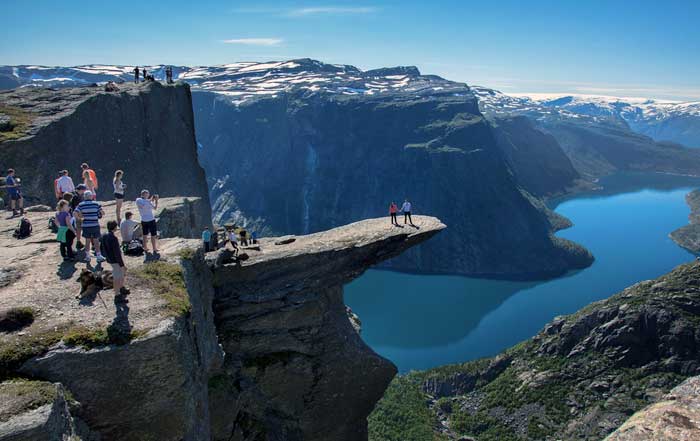
Perhaps the most distinctive feature of Nordic wellness is the deep integration of nature into everyday life. The concept of "friluftsliv", often translated as "open-air living," reflects a conviction that regular exposure to forests, coasts, lakes, and mountains is essential for psychological and physical well-being. This is not limited to rural communities; Nordic cities rank among the world's greenest, with extensive parklands, waterfront access, and protected natural areas embedded into urban planning.
Research supported by organizations such as the Nordic Council of Ministers and documented in journals indexed by ScienceDirect has shown that proximity to green and blue spaces is correlated with lower stress, improved mood, and higher levels of physical activity. This evidence base has informed policies that guarantee public access to nature, such as the "right to roam" in Sweden and Norway, which allows citizens to hike and camp responsibly on uncultivated land.
For the global audience of wellnewtime.com, particularly readers interested in environment, lifestyle, and travel, the Nordic relationship with nature illustrates how environmental policy directly shapes personal wellness. The editorial coverage at wellnewtime's environment page frequently echoes this insight: that planetary health and individual health are not parallel conversations but one and the same.
Design, Architecture, and the Aesthetics of Calm
Scandinavian design has become a worldwide shorthand for minimalism, functionality, and calm, but its wellness implications are sometimes overlooked. Nordic interiors prioritize natural light, neutral colors, tactile materials such as wood and wool, and uncluttered layouts that reduce sensory overload. This design language is not merely aesthetic; it is rooted in psychological research on how light, noise, and visual complexity affect mood and cognitive performance, as discussed in resources from The American Institute of Architects and World Green Building Council.
Architects and urban planners in the region have embraced biophilic design, integrating plants, natural textures, and organic forms into offices, schools, and public buildings. Companies such as IKEA have globalized aspects of this philosophy through accessible home and office products that encourage ergonomic, flexible, and calming environments. At a city level, Stockholm, Copenhagen, and Oslo have been cited in rankings by sources like Monocle and The Economist Intelligence Unit as examples of urban environments that blend density with livability.
For readers exploring mindfulness, interior calm, and mental clarity on wellnewtime's mindfulness channel, Nordic design demonstrates how physical spaces can be strategic tools for stress reduction, focus, and emotional balance, whether in homes, workplaces, or hospitality settings.
Community, Equality, and Social Trust as Health Assets
Another defining strength of the Nordic model is its emphasis on social cohesion, equality, and trust. High levels of trust in public institutions, low corruption, and strong social safety nets have been documented in comparative indices such as Transparency International's Corruption Perceptions Index and the World Bank's governance indicators. These structural features are not abstract metrics; they directly influence mental health by reducing uncertainty, insecurity, and social fragmentation.
Nordic welfare systems ensure broad access to healthcare, education, childcare, and eldercare, supporting intergenerational well-being. Policies that promote gender equality-reflected in the region's strong performance in the World Economic Forum's Global Gender Gap Report-reinforce the principle that wellness is inseparable from fairness. When people feel they live in a relatively just society, stress levels decline and social resilience increases.
For global professionals, entrepreneurs, and policy thinkers reading wellnewtime.com, this is a critical lesson: wellness initiatives that ignore structural inequality and social trust will struggle to deliver sustainable results. The Nordic experience suggests that true wellness ecosystems require coordinated action across policy, business, and community life, a theme that also surfaces across wellnewtime's lifestyle coverage.
Technology, Research, and Evidence-Led Innovation
While rooted in centuries-old practices, the Nordic wellness model is far from nostalgic. The region is a leader in digital health, medtech, and preventive-care research, blending tradition with cutting-edge science. Companies such as Flow Neuroscience in Sweden, which develops brain-stimulation technology for depression, and Airofit in Denmark, which offers respiratory training devices, exemplify how innovation can be directed toward improving core human capacities rather than simply creating new gadgets.
Academic institutions like Karolinska Institutet in Sweden and the University of Oslo in Norway have contributed significantly to global understanding of mental health, cardiovascular disease, and lifestyle medicine, with research frequently cited in databases such as The Lancet and BMJ. Public health projects like Finland's North Karelia initiative, which dramatically reduced heart disease through community-based lifestyle changes, continue to serve as case studies for integrated prevention strategies in reports by organizations like the World Health Organization.
For innovators, investors, and policymakers tracking wellness technology and health systems through wellnewtime's innovation page, the Nordic example underscores the importance of grounding wellness products and services in rigorous science, ethical frameworks, and long-term public health goals rather than short-term commercial trends.
Wellness Tourism and the New Travel Expectations
As international travel has resumed and evolved after the disruptions of the early 2020s, wellness has become a key differentiator in tourism. The Nordic countries have capitalized on this shift not by building isolated wellness enclaves but by inviting visitors into authentic local routines: sauna rituals, forest bathing, coastal hiking, geothermal bathing, and farm-to-table dining. Properties such as Treehotel in Sweden and Ion Adventure Hotel in Iceland have gained global attention for integrating architecture, landscape, and restorative experiences in ways that minimize ecological impact.
National tourism boards and regional alliances have aligned their strategies with sustainability standards promoted by organizations such as the Global Sustainable Tourism Council and the Nordic Council of Ministers, emphasizing low-impact transport, renewable energy, and community-based experiences. For travelers who follow wellnewtime's travel insights, Nordic destinations illustrate how wellness tourism can move beyond spa-centric packages to become a holistic immersion in local culture, climate, and community values.
Sustainability as a Non-Negotiable Dimension of Wellness
In 2026, climate risk, pollution, and biodiversity loss are no longer peripheral concerns for the wellness industry; they are central determinants of long-term health. The Nordic region has been at the forefront of linking environmental and personal wellness through ambitious climate policies, circular economy models, and clean urban infrastructure. Sweden's legally binding target of net-zero greenhouse gas emissions by 2045, Norway's leadership in electric vehicle adoption, and Denmark's advances in wind energy and green shipping are widely cited in analyses by UN Environment Programme and the International Energy Agency.
Corporate initiatives such as IKEA's circular design programs, Neste's renewable fuels, and fashion sustainability efforts originating in Scandinavia have set benchmarks for responsible production and consumption. These developments reinforce a message that is central to wellnewtime.com and explored regularly on its environment section: any definition of wellness that ignores air quality, climate stability, and resource stewardship is incomplete. Nordic societies have operationalized this insight in policy, business strategy, and everyday behavior, from recycling norms to low-meat diets and public transport usage.
Mindfulness, Silence, and the Value of Slowness
In a hyper-connected, always-on world, one of the most distinctive Nordic contributions to modern wellness is the normalization of silence and slowness. Finland's promotion of "silence" as part of its national image, inviting visitors to experience the restorative stillness of forests and lakes, reflects a cultural comfort with quiet that contrasts sharply with many urbanized societies. Mindfulness in the Nordic context is often informal and nature-based: walking in the woods, foraging, knitting, or simply sitting by a window in winter light.
At the same time, structured mindfulness and mental training programs have gained institutional support. Initiatives like Mindful Nation Norway and workplace mindfulness offerings across Nordic public and private sectors echo a growing global evidence base, documented in resources such as Mindful.org and research compiled by American Psychological Association, that shows how attention training and contemplative practices can improve focus, emotional regulation, and resilience.
For readers exploring mental clarity and stress management on wellnewtime's mindfulness pages, Nordic practices highlight that mindfulness does not need to be complex or heavily branded; it can be embedded in the way time, space, and social expectations are structured.
Nordic Wellness as Global Soft Power
Over the past decade, Nordic wellness values have evolved into a subtle but influential form of soft power. Through design, fashion, hospitality, environmental leadership, and public diplomacy, the region has projected an image of calm, competence, and ethical modernity. International organizations such as the Nordic Council and Nordic Innovation have promoted models of green growth, inclusive labor markets, and health-oriented urban planning at global forums including the United Nations and the World Health Organization.
Brands associated with Nordic aesthetics and values-such as Marimekko, Hästens, and others in the lifestyle and home sectors-have gained international traction precisely because they connect beauty with durability, simplicity, and ethical production. For readers who follow brand strategy and consumer trends on wellnewtime's brands section, the Nordic trajectory underscores a key shift: in the wellness economy of 2026, perceived authenticity, social responsibility, and environmental performance are as important as product features or price.
Strategic Lessons for a World in Transition
For business leaders, policymakers, wellness practitioners, and informed consumers across the United States, United Kingdom, Germany, Canada, Australia, Asia, Africa, and Latin America, the Nordic model offers several strategic lessons that align closely with the editorial mission of wellnewtime.com.
First, simplicity is a competitive advantage. In an era of complexity and information overload, clear principles-moderation, balance, and respect for limits-create stability and trust. Second, equity is integral to wellness; without fair access to healthcare, nature, time, and opportunity, wellness becomes a privilege rather than a shared baseline. Third, sustainability is not an optional add-on but a structural requirement for long-term health and economic resilience.
These insights intersect with multiple content verticals on wellnewtime.com, from wellness and health to business, environment, lifestyle, travel, and innovation, reflecting the reality that modern wellness is multidisciplinary by nature.
Looking Ahead: Nordic Vision and the Future of Global Wellness
The Nordic Vision 2030 framework, championed by the Nordic Council of Ministers, aims to make the region the world's most sustainable and integrated area by 2030, with goals that explicitly connect climate neutrality, circular economies, and social inclusion. This agenda is effectively a wellness strategy at the scale of nations, recognizing that climate security, digital transformation, and mental health are intertwined.
As global stakeholders navigate geopolitical uncertainty, technological disruption, and ongoing public health challenges in 2026, the Nordic experience offers a grounded, evidence-informed template for aligning economic ambition with human and planetary well-being. It shows that wellness is not a niche sector but a lens through which to design policy, business models, and everyday life.
For the international community that turns to wellnewtime.com for trusted guidance on wellness, health, business, lifestyle, environment, and innovation, Nordic wellness traditions are less a distant curiosity than a practical benchmark. They invite individuals, organizations, and governments alike to reconsider what progress means-and to recognize that balance, connection, and sustainability are not constraints on growth but the conditions that make it enduring.
Readers can continue exploring these themes across wellnewtime's wellness coverage, business and innovation features, lifestyle and travel insights, and in-depth reporting on environmental and health trends, as the site continues to track how Nordic-inspired principles are being adapted and reimagined around the world.