

Healthy Communities Through Cleaner Environments
A New Era of Health-Centered Environmental Thinking
The global conversation about health and sustainability has shifted decisively from abstract climate targets to the concrete, daily realities of how people live, work and move through their communities. Across North America, Europe, Asia, Africa and South America, policy makers, business leaders and citizens increasingly understand that cleaner environments are not simply a matter of ecological responsibility; they are a foundational determinant of physical, mental and social wellbeing. For WellNewTime, whose daily updated readers track emerging trends in wellness, health, fitness, mindfulness, lifestyle and sustainable business, this evolution represents both an opportunity and a responsibility: to explore how healthier communities and cleaner environments are inseparable, and to translate global evidence into practical insight for individuals, brands and institutions.
Public health data from organizations such as the World Health Organization (WHO) underscores the scale of the challenge. Air pollution alone is estimated to cause millions of premature deaths annually, with disproportionate burdens on urban residents in rapidly growing cities from the United States and United Kingdom to China, India and Brazil. Readers who wish to explore the global evidence on environmental health can review the WHO's overview of environmental health, which outlines how air, water, chemicals and climate interact with human biology. At the same time, the wellness economy is expanding, with people investing more than ever in fitness, nutrition, mindfulness and travel experiences that promise to restore balance and resilience. The central question for 2026 is how to connect these individual wellness choices with systemic environmental improvements that benefit entire communities.
The Science Linking Environment and Community Health
The relationship between cleaner environments and healthier communities is now one of the most studied intersections in public health, epidemiology and environmental science. Long-term cohort studies in the United States, Canada and Europe have shown consistent associations between exposure to fine particulate matter (PM2.5), nitrogen dioxide and ozone and elevated risks of cardiovascular disease, respiratory illness, diabetes and certain cancers. The United States Environmental Protection Agency (EPA) provides a clear introduction to how air quality affects health and what thresholds are considered safe in its resources on air quality and health. Similar findings have been replicated by Public Health England, Health Canada and leading research institutes in Germany, Sweden and Japan, demonstrating that cleaner air translates into fewer hospital admissions, reduced absenteeism from work and school, and lower healthcare costs.
Water quality is equally critical. Communities from rural Africa to urban North America rely on safe drinking water and effective wastewater treatment to prevent infectious disease, protect child development and sustain local economies. The United Nations Environment Programme (UNEP) highlights how water pollution, plastic waste and chemical runoff threaten both human health and biodiversity, and its guidance on freshwater and sanitation emphasizes the need for integrated watershed management. When rivers and coastal zones are contaminated, communities lose not only safe water but also recreational spaces, tourism income and cultural connections to nature, all of which are central to wellbeing.
Noise, light pollution and urban heat islands are emerging as equally serious, though often less visible, environmental stressors. Researchers at institutions such as Harvard T.H. Chan School of Public Health have documented how chronic noise from traffic and aviation can contribute to sleep disturbance, hypertension and anxiety, while excessive artificial light at night disrupts circadian rhythms and metabolic health. Readers interested in the intersection of environment and chronic disease can explore Harvard's work on environmental health, which integrates epidemiology, toxicology and policy analysis. These insights reinforce a core theme for WellNewTime: wellness is not confined to personal choices; it is deeply conditioned by the quality of the environments that surround individuals and families.
Environmental Wellness as the Missing Pillar of Holistic Health
The wellness movement has traditionally focused on physical fitness, nutrition, mental health and personal care, but in 2026 there is a growing recognition that environmental wellness must be treated as a co-equal pillar. For readers exploring holistic approaches to wellbeing, WellNewTime offers dedicated coverage of wellness, health and fitness, and increasingly integrates environmental context into each of these domains. A person can adopt an optimal exercise routine, follow evidence-based nutrition guidelines and practice mindfulness daily, yet still struggle with asthma, headaches or chronic fatigue if they live in a neighborhood with poor air quality, limited green space and high noise levels.
Global research on "green exercise" and nature exposure illustrates how environmental wellness amplifies the benefits of traditional health behaviors. Studies synthesized by Stanford University and the University of Exeter show that walking, running or cycling in parks, forests or along waterfronts can reduce stress hormones, improve mood and enhance cognitive function more than similar activities performed in purely urban settings. The European Environment Agency (EEA) provides accessible insights into how urban green infrastructure supports both climate resilience and public health, and its analysis of urban environment and health is particularly relevant for cities in Europe, the United Kingdom and the Nordic countries. These findings support the idea that cleaner, greener environments act as force multipliers for wellness investments, turning individual efforts into community-wide gains.
For organizations and brands operating in the wellness, beauty and lifestyle sectors, environmental wellness is rapidly becoming a key dimension of credibility. Consumers in markets such as Germany, France, Canada and Australia increasingly expect that products and services promising health benefits will also demonstrate low environmental impact, transparent sourcing and responsible packaging. On WellNewTime, incredible sections such as beauty, lifestyle and brands track how companies are rethinking their value propositions to integrate environmental stewardship with personal care, thereby reinforcing the interconnectedness of individual and planetary health.
Air, Water and Urban Design: The Building Blocks of Healthy Communities
At the community level, the quality of air, water and urban design determines whether environmental wellness is accessible to all or remains a privilege for a few. In large metropolitan areas from Los Angeles and New York to London, Berlin, Tokyo and São Paulo, air quality is shaped by transportation systems, industrial activity, building efficiency and energy choices. The International Energy Agency (IEA) has documented how the transition to renewable energy, electrified transport and efficient buildings can simultaneously reduce greenhouse gas emissions and air pollutants that harm human health, and its analysis of clean energy transitions offers a roadmap for policy makers and businesses. When cities invest in low-emission zones, public transit, cycling infrastructure and green building codes, they not only advance climate goals but also create conditions for healthier lungs, hearts and minds.
Water infrastructure is equally decisive. The World Bank has emphasized that safe water and sanitation are foundational to economic development and social stability, particularly in emerging economies across Asia, Africa and South America, and its resources on water and sanitation highlight the business and policy case for long-term investment. For communities in Europe and North America, modernizing aging pipes, treatment plants and stormwater systems is essential to prevent contamination events and to adapt to more intense rainfall linked to climate change. Clean rivers, lakes and coastal areas also support local tourism, wellness retreats and outdoor recreation, sectors that are increasingly important to readers of WellNewTime who follow travel and nature-based experiences.
Urban design ties these elements together. Compact, walkable neighborhoods with mixed land uses, abundant trees and accessible public spaces have been consistently associated with higher levels of physical activity, lower obesity rates and better mental health. The World Resources Institute (WRI), through its work on sustainable cities, has shown how transport planning, land use policy and public space design can reduce pollution, enhance safety and foster social cohesion. When residents can safely walk or cycle to work, school, shops and parks, they are more likely to meet daily movement guidelines, engage with neighbors and feel a sense of belonging, all of which contribute to the collective resilience that WellNewTime readers value.
Mental Health, Mindfulness and the Psychology of Place
Cleaner environments do not only protect lungs and hearts; they also shape the psychological landscapes in which people navigate stress, work demands and life transitions. The rise of mindfulness practices, meditation apps and mental health awareness has brought attention to the importance of internal states, yet external surroundings remain a powerful determinant of emotional balance. Crowded, noisy, polluted neighborhoods with limited access to nature are consistently associated with higher levels of anxiety, depression and burnout, while cleaner, greener environments can act as buffers against stress and trauma. The American Psychological Association (APA) has explored these connections in its work on psychology and climate change, showing how environmental degradation can contribute to eco-anxiety, while positive environmental action can foster agency and hope.
For readers exploring mindfulness and mental resilience, WellNewTime offers coverage in its mindfulness and health sections, emphasizing that inner calm is easier to cultivate when noise, air pollution and visual clutter are reduced. Research from universities in Scandinavia and the Netherlands has demonstrated that even brief exposures to urban parks or waterfronts can lower cortisol levels and improve attention, supporting the design of "micro-restorative" spaces near workplaces, schools and healthcare facilities. Organizations such as The Nature Conservancy have highlighted how nature-based solutions in cities, including pocket parks, green roofs and restored wetlands, deliver both mental health benefits and climate resilience, and its work on nature in cities offers practical examples from global regions of interest to WellNewTime readers.
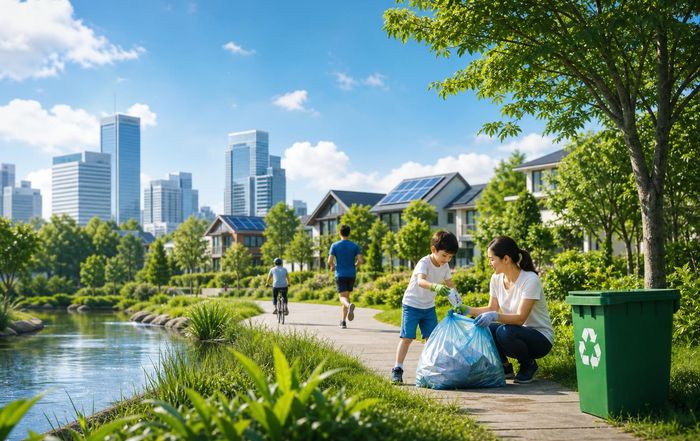
Mindfulness practitioners and mental health professionals are increasingly advocating for an expanded definition of self-care that includes environmental advocacy and community engagement. Participating in local clean-up efforts, tree-planting events or citizen science projects can foster a sense of purpose and connection, reducing feelings of isolation and helplessness. For a global audience spanning the United States, United Kingdom, Germany, Canada, Australia, Singapore, South Korea, Japan and beyond, the message is consistent: caring for one's surroundings is a powerful extension of caring for oneself.
The Wellness Economy's Role in Environmental Transformation
The global wellness economy, spanning fitness, beauty, nutrition, mental health, travel and complementary therapies, now represents a multi-trillion-dollar sector with outsized influence on consumer behavior and cultural norms. As WellNewTime tracks in its business and brands coverage, companies that position themselves as guardians of health and wellbeing are under growing pressure to align their operations with environmental best practices. This transformation is not merely reputational; it is increasingly material, as investors, regulators and consumers demand transparent climate strategies, responsible sourcing and circular product design.
Organizations such as the Global Wellness Institute (GWI) have documented how wellness tourism, fitness technology, spa services and workplace wellness programs are intersecting with sustainability expectations, and its research on wellness and the environment points to a future in which environmental credentials are integral to brand value. For example, wellness resorts in Thailand, Italy, New Zealand and Costa Rica are investing in renewable energy, water conservation, regenerative landscaping and local food systems as core elements of their guest experience, not peripheral add-ons. Corporate wellness providers in the United States, United Kingdom, Germany and Singapore are incorporating environmental education and green commuting incentives into employee programs, recognizing that cleaner environments reduce absenteeism and improve productivity.
Beauty and personal care brands are undergoing a parallel transformation. Consumers increasingly scrutinize ingredient lists, packaging materials and supply chains, expecting that products marketed as "clean" or "natural" will also be environmentally responsible. Industry initiatives such as the Ellen MacArthur Foundation's work on the circular economy are encouraging companies to design out waste, keep materials in use and regenerate natural systems, principles that align directly with the values of WellNewTime readers who prioritize both personal and planetary health. By adopting refillable packaging, biodegradable ingredients and transparent sourcing, brands can contribute to cleaner environments while building trust with a discerning global audience.
Innovation, Technology and Data for Cleaner, Healthier Cities
Technological innovation is reshaping how communities measure, manage and improve environmental conditions. In 2026, cities across North America, Europe, Asia and Africa are deploying networks of low-cost sensors to monitor air quality, noise levels, traffic flows and urban heat in real time, enabling more targeted interventions and transparent communication with residents. The concept of the "smart city" is evolving beyond efficiency to prioritize health and equity, with data-driven tools guiding investments in green infrastructure, public transit and building retrofits. The World Economic Forum (WEF) has explored how digital technologies can support sustainable, inclusive urban development, and its insights on smart cities and health illustrate the potential and pitfalls of data-centric approaches.
For readers interested in the intersection of wellness and innovation, WellNewTime provides in-depth analysis in its innovation and environment sections, highlighting case studies where technology supports cleaner, healthier living. Wearable devices now track not only steps and heart rate but also exposure to air pollution and noise, giving individuals more information about when and where to exercise outdoors. Building management systems optimize ventilation, filtration and natural light to reduce indoor pollutants and support circadian health, while electric mobility platforms reduce tailpipe emissions and noise in dense urban districts.
However, innovation alone is insufficient without governance, accountability and community participation. Data must be translated into policy, infrastructure and behavior change, and the benefits of cleaner environments must be shared equitably across neighborhoods and demographic groups. International organizations such as UN-Habitat emphasize inclusive planning and community co-creation in their work on sustainable urban development, reminding decision makers that technological solutions must be anchored in local context and lived experience. For WellNewTime, which reaches readers from diverse cultural and economic backgrounds, this nuance is essential: innovation should empower communities, not deepen divides.
Work, Jobs and the Emerging Green Wellness Workforce
As economies transition toward cleaner energy, circular production and more sustainable consumption, the nature of work itself is changing. New roles are emerging at the intersection of environment, health and wellness, from sustainability officers in fitness and hospitality companies to environmental health specialists in local government and green building consultants in architecture and real estate. The International Labour Organization (ILO) has examined how climate action and environmental protection can generate millions of new jobs worldwide, and its analysis of green jobs underscores the importance of skills development and social protection.
For professionals and job seekers following WellNewTime's jobs coverage, this shift presents both opportunity and responsibility. Wellness practitioners, including massage therapists, fitness trainers, nutritionists and mindfulness coaches, are increasingly expected to understand the environmental dimensions of their work, from the sourcing of products and equipment to the choice of locations and the design of client experiences. Spas and massage centers, topics frequently explored in WellNewTime's massage and beauty sections, are adopting eco-certifications, water-saving technologies and non-toxic materials to align their physical spaces with their healing missions.
Workplace wellness programs are also evolving. Employers in sectors as diverse as technology, finance, manufacturing and public services are recognizing that environmental conditions, both inside offices and in surrounding neighborhoods, are integral to employee health and engagement. Initiatives such as green commuting incentives, indoor air quality monitoring, biophilic design and support for remote work can reduce emissions while improving mental and physical wellbeing. For global readers in the United States, United Kingdom, Germany, Canada, Australia, Singapore, South Korea and beyond, the message is clear: the future of work is inseparable from the future of the environment, and careers that contribute to cleaner communities will be increasingly valued.
A Global Perspective: Regional Pathways to Cleaner, Healthier Communities
While the principles linking cleaner environments to healthier communities are universal, the pathways to implementation differ across regions. In North America and Western Europe, priorities often focus on decarbonizing transport and buildings, retrofitting aging infrastructure and addressing environmental injustices that disproportionately affect low-income and minority communities. The European Commission's European Green Deal provides a comprehensive framework for climate neutrality, clean energy, sustainable mobility and biodiversity protection, with explicit recognition of the health co-benefits of environmental action.
In rapidly growing cities across Asia, from China and India to Thailand, Malaysia and Indonesia, the challenge is to align economic development with environmental protection, avoiding the lock-in of high-pollution infrastructure. Investments in mass transit, renewable energy, efficient housing and green industry offer opportunities to leapfrog older, more polluting models. In Africa and South America, priorities include expanding access to clean water, sanitation, clean cooking fuels and resilient agriculture, while protecting forests, wetlands and coastal ecosystems that provide vital ecosystem services. The World Health Organization's work on health and climate change highlights how climate adaptation and mitigation strategies can simultaneously strengthen health systems and reduce environmental risks across these diverse regions.
For a global readership, WellNewTime seeks to contextualize these regional pathways, recognizing that readers in the United States, United Kingdom, Germany, Canada, Australia, France, Italy, Spain, the Netherlands, Switzerland, China, Sweden, Norway, Singapore, Denmark, South Korea, Japan, Thailand, Finland, South Africa, Brazil, Malaysia and New Zealand face different environmental realities but share common aspirations for healthier, more vibrant communities. By highlighting best practices, innovative policies and inspiring local initiatives, the platform helps bridge geographic divides and fosters a sense of shared purpose.
The Role of Media and Platforms like WellNewTime
Trusted information is a critical enabler of healthier communities and cleaner environments. In an era of rapid change and information overload, individuals, businesses and policy makers need clear, evidence-based guidance to navigate complex trade-offs and to distinguish substantive action from superficial "greenwashing." Platforms like WellNewTime play a vital role in curating insights at the intersection of wellness, health, environment, business and lifestyle, connecting scientific research, policy developments and market innovations with the everyday decisions of readers.
By integrating environmental context into its coverage of wellness, health, fitness, travel, lifestyle and environment, WellNewTime underscores that personal wellbeing cannot be separated from the quality of air, water, food systems and public spaces. Its reporting on business, brands and innovation highlights companies and entrepreneurs who demonstrate Experience, Expertise, Authoritativeness and Trustworthiness in aligning commercial success with environmental responsibility. Its global news and world sections situate local developments within broader geopolitical and economic trends, helping readers understand how international agreements, national policies and corporate strategies influence the environments in which they live.
As the world moves deeper into the decisive decade for climate and health, the mission of platforms like WellNewTime becomes even more important: to inform, to inspire and to hold institutions accountable, while offering practical pathways for individuals and communities to participate in building cleaner, healthier futures.
Looking Ahead: From Awareness to Collective Action
In 2026, the evidence is overwhelming: cleaner environments are not a luxury, but a prerequisite for healthy communities. Air quality, water safety, urban design, biodiversity and climate stability all shape the physical, mental and social wellbeing of people across every continent. The task now is to translate awareness into sustained, collective action that bridges sectors and scales, from individual choices and neighborhood initiatives to corporate strategies and national policies.
For readers and members of WellNewTime, this means recognizing that every dimension of wellness-exercise routines, nutrition, mindfulness practices, travel experiences, beauty rituals and workplace habits-is connected to the broader environmental systems that sustain life. It means supporting brands and businesses that demonstrate genuine commitment to environmental stewardship, advocating for policies that prioritize clean air and water, and participating in local efforts to green neighborhoods, protect natural areas and reduce waste. It also means staying informed through trusted sources, critically evaluating claims and seeking out evidence-based perspectives that integrate health, environment and equity.
Healthy communities through cleaner environments are not an abstract ideal; they are an achievable outcome of informed choices, innovative solutions and shared responsibility. Platforms like WellNewTime, by weaving together insights from science, business, policy and lived experience, help chart the path forward, inviting readers around the world to see themselves not just as consumers of wellness, but as co-creators of healthier, more sustainable communities for generations to come.