

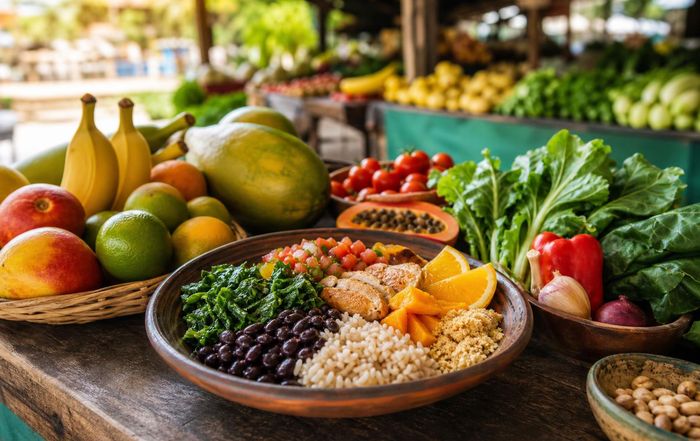
Brazilian Food Markets: A Guide to Balanced Local Meals
Brazil's food markets are among the most vivid expressions of the country's culture: loud, colorful, and full of fresh produce, regional specialties, and everyday staples. For travelers and locals who care about wellness, they are also one of the best places to build balanced, affordable meals that reflect Brazilian traditions without relying on ultra-processed foods. Understanding how markets work, what to buy, and how to combine ingredients can turn a simple shopping trip into a foundation for healthier living.
This fresh and yummy guide looks at how to navigate Brazilian markets with a wellness lens: what you will typically find, how to interpret local staples nutritionally, and how to assemble balanced plates that respect local food culture. It draws on Brazil's own pioneering dietary guidelines as well as broader nutrition research, and connects those principles to practical choices at the feira (street market) or municipal market.
How Brazilian Markets Fit into a Wellness-Focused Lifestyle
Street markets (feiras livres), neighborhood produce stalls, and covered municipal markets are central to daily life in many Brazilian cities and towns. Vendors typically sell fresh fruits, vegetables, grains, beans, meats, fish, eggs, and regional products that anchor traditional meals. Unlike large supermarkets dominated by packaged options, these markets still revolve around minimally processed foods, which aligns closely with modern public health advice.
Brazil's official Guia Alimentar para a População Brasileira, developed by the Ministry of Health and Fiocruz, is widely recognized by organizations such as the Pan American Health Organization and World Health Organization for emphasizing real, minimally processed foods and discouraging ultra-processed products. Its NOVA classification system focuses less on nutrients in isolation and more on the degree of processing. Markets, by design, are ideal spaces to follow this guidance: fresh cassava, whole fruits, leafy greens, and dried beans dominate the stalls, and home-style preparations are easy to recreate with a simple kitchen.
For readers interested in broader wellness and nutrition-driven health, Brazilian markets provide a practical case study in how food environments shape choices. They show how cultural traditions-rice and beans, seasonal fruit juices, grilled fish-can support balanced meals rich in fiber, plant protein, micronutrients, and healthy fats. At the same time, the presence of fried snacks, sugary drinks, and sweet desserts reminds visitors that "local" does not automatically mean "healthy," and that mindful selection still matters.
Understanding the Brazilian Plate: Staples and Their Nutritional Role
Most Brazilian home-cooked meals still revolve around a recognizable structure: a base of rice and beans, a source of protein (often meat, fish, or eggs), plenty of accompaniments such as salads or cooked vegetables, and sometimes a small portion of farofa (toasted cassava flour) or another side. This pattern, when not overshadowed by excess salt, fat, or processed meats, aligns closely with balanced meal models promoted by institutions like the Harvard T.H. Chan School of Public Health and Dietary Guidelines for Americans.
White rice is still the most common grain, but many markets now offer brown rice, whole grains like quinoa (often grown in neighboring Andean regions), and regional staples such as cornmeal and whole corn. Beans-black, carioca (pinto-like), white, and others-are central, providing fiber, plant protein, and minerals such as iron and magnesium. The pairing of rice and beans creates a complementary amino acid profile that approximates a complete protein, a combination also recognized in nutrition teaching by organizations such as the Academy of Nutrition and Dietetics.
Protein sources vary by region and budget. In coastal markets, fresh fish and seafood can be abundant, while in inland cities, chicken and beef often dominate butcher stalls. Eggs are widely available and relatively affordable. Traditional cuts like organ meats, common at some stalls, can be nutrient-dense but also high in cholesterol and should be eaten with moderation. Meanwhile, nuts such as Brazil nuts (castanha-do-Brasil) and cashews (castanha-de-caju) offer healthy fats and minerals like selenium, but their high energy density means portion awareness is important for those watching caloric intake.
Navigating the Feira: What You'll Find and How to Choose Well
A typical open-air market in Brazil is a sensory overload: vendors calling out prices, piles of mangoes and papayas, leafy greens sprayed with water, sacks of beans, and stalls frying pastel (stuffed pastries) on the spot. For wellness-minded shoppers, the key is to lean into the abundance of fresh, minimally processed foods while treating more indulgent offerings as occasional treats rather than daily staples.
Produce stalls usually showcase seasonal fruits and vegetables, which not only taste better but are often cheaper and more nutrient-dense when picked closer to ripeness. Brazil's tropical and subtropical climate allows for a wide variety of fruits-mango, pineapple, papaya, guava, passion fruit, bananas in multiple varieties, and regional specialties like açaí, cupuaçu, and graviola. These can form the backbone of a nutrient-rich wellness-oriented lifestyle, replacing many packaged sweets and desserts with naturally sweet, fiber-rich options.
Vegetable vendors sell staples such as tomatoes, onions, carrots, chayote, pumpkins, collard greens (couve), kale, cabbage, and lettuce. Many also offer herbs like cilantro and parsley, which are important for flavoring dishes without relying on excess salt. Some markets, particularly in larger cities like São Paulo, Rio de Janeiro, Salvador, and Recife, feature organic sections certified under Brazil's national organic program, which is overseen by the Ministry of Agriculture and aligned with standards recognized by bodies such as the Food and Agriculture Organization.
Beyond produce, markets usually include stalls for dried goods (rice, beans, lentils, flours), nuts and seeds, and sometimes small natural-products stands selling items such as whole-grain breads, granola, and minimally processed snacks. Compared with supermarkets, where ultra-processed products can dominate, the feira places whole foods front and center, making it easier to construct a balanced diet-provided shoppers still pay attention to cooking methods and portion sizes once they get home.
Building a Balanced Local Meal from Market Ingredients
Turning market ingredients into balanced meals is less about complicated recipes and more about proportions: plenty of vegetables, a moderate portion of whole or minimally processed carbohydrates, a mix of plant and animal proteins, and small amounts of added fat and salt. This structure echoes guidance from organizations like the World Health Organization and European Food Safety Authority on dietary patterns associated with lower risk of chronic disease.
A typical at-home Brazilian plate can be optimized with small changes. Instead of a large mound of white rice, a smaller portion can be paired with a generous serving of beans, which increases fiber and satiety. Collard greens sautéed quickly in a little oil and garlic, or a raw salad of tomatoes, onions, and lettuce dressed with lime juice and olive oil, can occupy half the plate. A palm-sized serving of grilled or baked fish, chicken, or lean beef completes the protein component. Farofa, if used, can be sprinkled lightly for texture rather than piled high, reducing refined carbohydrate and fat load.
For plant-forward or vegetarian meals, beans remain central, supported by lentils, chickpeas, and tofu (often available in larger urban markets). Nuts and seeds, including Brazil nuts and pumpkin seeds, can add crunch and healthy fats to salads or rice dishes. Many traditional vegetable stews, such as those based on pumpkin, okra, or leafy greens, can be prepared with less oil and salt than some restaurant versions, making them suitable for regular consumption. Readers interested in mindfulness may find that planning meals this way encourages more deliberate eating, with attention to flavor, texture, and satiety rather than simply following habit.
Regional Highlights: Eating Well Across Brazil's Diverse Food Cultures
Brazil's size and diversity mean that "the market" looks very different in each region, and understanding those differences can help visitors and locals alike make balanced choices that respect local traditions. In the Northeast, especially Bahia and Pernambuco, markets often feature ingredients for Afro-Brazilian dishes: dried shrimp, okra, coconut, and dendê (palm) oil. While dendê is integral to classics like moqueca and acarajé, it is highly energy-dense and rich in saturated fat, so home cooks looking for a lighter approach sometimes reduce the amount of oil or reserve richer dishes for special occasions.
In the Amazon region, markets in cities such as Manaus and Belém showcase river fish, wild fruits like açaí and cupuaçu, and forest products such as Brazil nuts. Açaí in its traditional unsweetened form is a thick, almost savory pulp often eaten with fish or cassava flour, quite different from the sweetened smoothie bowls popularized internationally. When consumed without large amounts of added sugar and ultra-processed toppings, açaí can be part of a nutrient-dense meal rich in antioxidants and healthy fats, a point echoed by research summarized by institutions like the National Institutes of Health.
In the South and Southeast, markets reflect European influences, with more emphasis on dairy, cured meats, and wheat-based products, as well as abundant fruits and vegetables from intensive agriculture. Open-air markets in São Paulo and Rio de Janeiro may include Japanese, Italian, and Middle Eastern influences, offering tofu, miso, tabbouleh, and other dishes that can easily be incorporated into balanced meals. In the Center-West, where cattle ranching is prominent, markets often feature beef and regional specialties like pequi fruit and guariroba palm hearts, which can be used to diversify vegetable intake.
For travelers who combine wellness with travel, exploring markets region by region offers an accessible way to experience Brazil's cultural diversity while keeping meals grounded in fresh, minimally processed foods. Paying attention to cooking techniques-grilled versus fried, stewed versus deep-fried, fresh fruit versus sugary desserts-helps align these culinary adventures with long-term health goals.
Eating at Market Stalls: Street Food, Snacks, and Smarter Choices
Brazilian markets are not only for raw ingredients; they are also hubs for ready-to-eat foods. Stalls selling pastel (deep-fried pastries), coxinha (fried chicken croquettes), bolinho de bacalhau (cod fritters), and caldo de cana (fresh sugarcane juice) are common. While these foods are part of the cultural experience, they are typically high in refined carbohydrates, fats, and sometimes sodium, and should be treated as occasional indulgences rather than staples for those prioritizing health.
The challenge, similar to many global street-food environments studied by organizations like the World Obesity Federation and Global Alliance for Improved Nutrition, is to enjoy the social and sensory aspects of street food without letting them dominate the diet. One practical approach is to share fried snacks with friends rather than consuming a full portion alone, and to pair them with fresh fruit or unsweetened beverages instead of sugary sodas. Many markets also offer grilled corn, fresh fruit salads, or tapioca crepes that can be filled with savory options like cheese and tomatoes, offering lighter alternatives when prepared with modest amounts of oil and salt.
Fruit juice stands are another focal point. Brazil's abundance of fresh fruit makes natural juices appealing, but large servings can contain significant amounts of sugar, especially when sweetened further with added sugar or condensed milk. Asking for juices "sem açúcar" (without sugar) or choosing whole fruits instead helps maintain fiber intake and moderates blood sugar spikes, a point emphasized in guidance from bodies such as the American Diabetes Association. Coconut water, widely sold fresh in markets and on streets, can be a more moderate option for hydration, though portion size still matters for those tracking carbohydrate intake.
Budget, Access, and Social Dimensions of Market Shopping
While wellness content often targets higher-income consumers, Brazilian markets are, in principle, democratic spaces: many families rely on them for affordable staples. However, access and affordability vary by city and neighborhood. In some urban centers, fresh produce in low-income areas can be more expensive or of lower quality than in wealthier districts, reflecting broader inequalities in food systems that organizations like the World Bank and UNICEF have documented globally.
On the positive side, markets can support both personal health and local livelihoods. Buying from small farmers and independent vendors can strengthen local economies and reduce the distance food travels, which connects to broader environmental and sustainability concerns. Some Brazilian municipalities have experimented with programs that bring subsidized produce markets into lower-income neighborhoods or accept social benefits as payment, aiming to improve access to fresh foods. While these initiatives vary in effectiveness, they highlight how public policy and community design influence what individuals can realistically eat.
For individuals shopping on a budget, planning around staples-rice, beans, seasonal vegetables, eggs-can keep costs down while maintaining nutritional quality. Bulk purchases of dried beans and whole grains, combined with smaller, frequent buys of perishable produce, often stretch budgets further than reliance on processed foods, which may appear cheaper per item but can be more expensive per nutrient. Simple home cooking techniques, such as pressure-cooking beans, roasting vegetables, and preparing large batches of rice and beans to freeze, make regular use of market ingredients more manageable for busy schedules.
Practical Tips for Wellness-Oriented Market Shopping in Brazil
For readers looking to integrate Brazilian market shopping into a broader healthy lifestyle, a few practical strategies can make a significant difference. Going to the market with a loose meal plan for the week-breakfast ideas, a few main dishes, and snacks-helps avoid overbuying and reduces food waste. Building each meal around vegetables and legumes first, then adding grains and animal protein, flips the typical "meat-centered" mindset and aligns with global public health recommendations.
Another helpful approach is to experiment with one or two new fruits or vegetables each visit. Brazil's biodiversity means there is almost always something unfamiliar on display, and incorporating variety supports a more diverse intake of micronutrients and phytochemicals, an idea supported by research reviewed by organizations like the British Nutrition Foundation. Trying new ingredients in small quantities can also make market visits more enjoyable and sustainable as a routine, rather than a one-off experience.
Finally, paying attention to how food makes the body feel-energy levels, digestion, satiety-can guide personal adjustments. Some people may find that large portions of white rice leave them sluggish, while others feel fine but benefit from increasing vegetable portions. Those engaged in regular fitness or physical training might prioritize lean proteins and complex carbohydrates from beans and whole grains, while others focus on fiber and plant diversity. The market provides the raw materials; mindful experimentation turns them into a personalized, balanced diet.
Markets as Everyday Wellness Hubs
Brazilian food markets are more than tourist attractions or nostalgic symbols; they are living infrastructures that can support or undermine public health depending on how people use them. When approached with an eye for minimally processed ingredients, seasonal diversity, and moderate portions of richer regional dishes, they offer one of the most accessible paths to balanced meals rooted in local culture.
For anyone interested in integrating wellness into daily routines-whether at home in Brazil, visiting from abroad, or simply drawing inspiration for their own local markets elsewhere-the Brazilian feira illustrates how environment, tradition, and individual choice intersect. It shows that balanced eating does not require abandoning cultural favorites, but rather understanding them more deeply, choosing thoughtfully, and cooking in ways that honor both flavor and health. In that sense, the market becomes not just a place to buy food, but a practical classroom for long-term, sustainable well-being.