

A Beginner's Guide to Body Scan Meditation at Home
Body scan meditation is one of the simplest ways to bring mindfulness into everyday life, yet many people only encounter it briefly in a yoga class or wellness app and never learn how to use it on their own. Practised regularly, it can help reduce stress, support better sleep, ease muscle tension, and deepen the connection between mind and body. This guide explains what a body scan is, how it works, what science says about it, and exactly how to get started with a safe, realistic home practice.
What is Body Scan Meditation?
Body scan meditation is a structured mindfulness practice in which attention is guided slowly and systematically through the body, usually from the feet up to the head (or the other way around). The aim is not to relax on command or to achieve a special state, but to notice physical sensations-pressure, warmth, tightness, tingling, or even numbness-moment by moment, with curiosity and without judgment. This style of meditation is a core component of Mindfulness-Based Stress Reduction (MBSR), a widely studied eight-week program developed by Jon Kabat-Zinn at the University of Massachusetts Medical Center in the late 1970s.
Unlike some forms of meditation that focus on a mantra or visual object, the body scan uses the body itself as the anchor for attention. Practitioners typically lie down or sit comfortably and move their awareness through different regions: toes, feet, ankles, calves, knees, thighs, pelvis, abdomen, chest, hands, arms, shoulders, neck, and face. When the mind wanders-which it naturally will-the instruction is to gently notice that and return to the body part currently in focus. Over time, this can cultivate a steadier, kinder awareness of both physical and emotional states, which aligns closely with the holistic focus on wellness and mindfulness that many readers are exploring.
How the Body Scan Affects Stress, Pain, and Mood
Research over the last few decades suggests that body scan meditation and related mindfulness practices can influence how people experience stress, pain, and mood, though effects vary and are not a cure-all. Controlled trials of MBSR, which includes regular body scans, have shown moderate reductions in perceived stress and anxiety in diverse groups, from healthcare workers to university students. Organizations such as the American Psychological Association highlight mindfulness-based interventions as promising approaches for stress and anxiety management, while emphasizing that they are not replacements for clinical treatment when needed. Readers can explore more on mindfulness and mental health through resources from the APA and the National Institute of Mental Health.
In chronic pain, the body scan may help people shift from automatically resisting or bracing against discomfort toward observing it with a bit more space. Studies summarized by the U.S. National Center for Complementary and Integrative Health indicate that mindfulness-based programs can produce small to moderate improvements in pain intensity and pain-related distress for some conditions, such as low back pain and fibromyalgia. The proposed mechanisms include reduced emotional reactivity, changes in pain-related beliefs, and possibly altered pain processing in the brain. Readers interested in broader integrative approaches can find evidence summaries via NCCIH and NIH.
Sleep quality is another area where body scan practice is commonly used. Some insomnia programs teach a short body scan as part of a pre-sleep routine, helping people shift attention away from racing thoughts and into neutral bodily sensations. While results vary, clinical sleep guidelines from organizations like the American Academy of Sleep Medicine and NHS in the UK acknowledge relaxation and mindfulness exercises as useful adjuncts to behavioral sleep strategies. For many people, a 10-20 minute body scan in bed becomes a practical nightly ritual that signals the nervous system to downshift, complementing other lifestyle strategies featured in health and lifestyle coverage.
Preparing Your Space: Setting Up for Home Practice
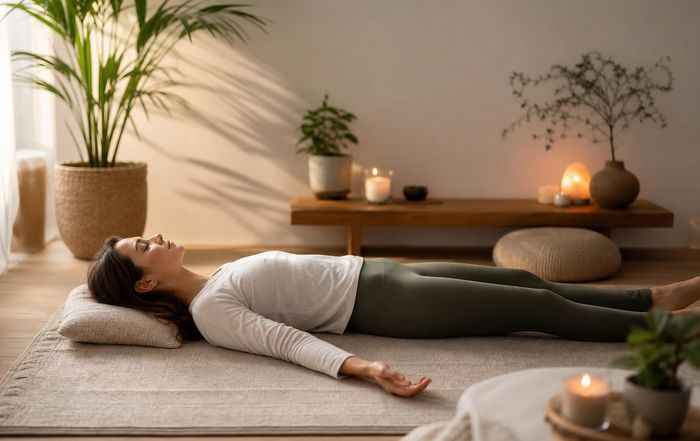
Creating the right conditions at home makes it much more likely that body scan meditation will feel sustainable rather than like another task on a crowded to-do list. The practice does not require special equipment, but a few thoughtful choices can make a significant difference. Many people prefer to lie down on a yoga mat, carpet, or firm mattress, with a small pillow under the head and perhaps a cushion or rolled towel under the knees to ease pressure on the lower back. Others with back issues may find it more comfortable to sit in a supportive chair with feet flat on the floor. The key is a posture that feels stable and safe, allowing the body to be relatively still for 10-30 minutes.
Lighting and temperature also matter. A dim, warm environment tends to support relaxation, though it is not essential. Loose, non-restrictive clothing works best, especially around the waist, chest, and shoulders, where many people hold tension. Turning off notifications on phones, tablets, and computers can prevent interruptions; some prefer to leave devices in another room entirely. If noise is an issue, white noise or a simple fan can help mask background sounds, but it is also possible-and ultimately useful-to learn to notice sounds as part of the meditation rather than as problems to eliminate. Readers interested in broader home wellness environments may find practical ideas in sections on environment and world lifestyle trends.
For beginners, using a guided audio from a reputable mindfulness teacher or health organization can be very helpful. Organizations such as UCLA Health, Harvard Health Publishing, and Mayo Clinic provide introductory mindfulness recordings, and several major meditation apps offer free body scan sessions. When selecting digital tools, it is worth favoring those associated with established health or educational institutions or well-reviewed mindfulness teachers rather than purely commercial offerings with little transparency about their methods.
A Step-by-Step Body Scan You Can Try Today
While guided recordings are useful, understanding the basic structure of a body scan allows anyone to practice independently and adapt the sequence to their needs. The following description outlines a classic approach that can be shortened or lengthened as needed. It is not a medical protocol and should be adjusted gently in light of any pain, injury, or health condition.
Begin by lying on your back or sitting upright but relaxed. Close your eyes if that feels safe, or soften your gaze. Take a few natural breaths, noticing the contact between your body and the surface supporting you. Without trying to change anything, simply register the weight of the body, the temperature of the air on the skin, and any sounds in the room. Then bring attention to the toes of one foot. Notice sensations such as tingling, warmth, coolness, or perhaps nothing at all. The instruction is to feel directly, not to imagine what should be there. After a few breaths, expand awareness to the rest of the foot, the ankle, and then slowly up through the calf and shin.
Continue in this way, moving attention methodically through the knee, thigh, and hip of that leg before shifting to the other leg. If you prefer, you can attend to both legs together. When the mind wanders to thoughts, plans, or judgments, gently notice that wandering-"thinking," "planning," "worrying"-and return to the sensations in the body part currently in focus. This simple act of noticing and returning is the central "muscle" of mindfulness. After the legs, bring awareness to the pelvis and lower back, noticing contact with the surface beneath you, then to the abdomen and lower ribs, observing the natural movement of the breath without forcing it.
From there, shift to the chest, noticing the rise and fall with each breath, and then to the upper back and shoulder blades. Move attention down each arm: shoulders, upper arms, elbows, forearms, wrists, hands, and fingers, spending several breaths in each region. Finally, explore the neck, throat, jaw, mouth, cheeks, eyes, forehead, and scalp. As you reach the top of the head, you can either rest in a sense of the whole body breathing, or reverse the scan back down more quickly. At the end, take a moment to notice any changes in your state, then gently open the eyes and transition back to daily activity. For additional guidance on integrating this into a broader wellness routine, readers can explore related topics in wellness and fitness.
Common Experiences (and Misconceptions) for Beginners
New practitioners often wonder whether they are "doing it right." In reality, body scan meditation is less about perfect technique and more about cultivating a particular attitude toward experience. One common misconception is that the goal is to feel relaxed throughout. Relaxation is a frequent side effect, but not a requirement. Some sessions may bring up restlessness, boredom, or emotional discomfort. When that happens, the practice is to notice these reactions as sensations and thoughts, rather than fighting them or judging oneself for having them. Over time, this can build emotional resilience and self-awareness, which connects closely with the broader themes of mindfulness and mental health covered in international guidance from organizations like the World Health Organization.
Another common experience is drowsiness, particularly when lying down. It is normal to drift toward sleep, especially at the end of a long day. If staying awake is important-for example, during a daytime practice-it may help to sit up rather than lie flat, or to open the eyes slightly. Conversely, if the primary aim is to support sleep, allowing the body scan to gently merge into drowsiness is perfectly acceptable. People also worry about "not feeling anything" in certain body parts. Numbness or lack of clear sensation is still a valid observation; the task is simply to notice that absence without forcing or imagining sensations.
Some individuals with a history of trauma or significant anxiety may find that detailed attention to bodily sensations can initially feel overwhelming or triggering. Trauma-informed mindfulness teachers and mental health professionals emphasize that it is important to respect one's own limits. If the body scan becomes distressing, it may be appropriate to shorten the practice, keep attention on more neutral areas (such as the hands or feet), or shift to external anchors like sounds. Consulting with a licensed therapist familiar with mindfulness, or resources from organizations like Mind in the UK or Mental Health America, can be helpful when deciding how to adapt practices safely.
Adapting the Body Scan to Your Body and Lifestyle
There is no single "correct" way to perform a body scan. The traditional long version used in MBSR can last 30-45 minutes, but many people benefit from shorter sessions, especially at the beginning. Busy professionals might experiment with a 5-10 minute scan focusing only on a few regions-such as feet, abdomen, shoulders, and face-during a lunch break or before important meetings. Those managing chronic pain or recovering from injury can skip or lightly touch on areas that are especially painful, focusing instead on nearby regions or neutral sensations. Pain specialists and physiotherapists sometimes incorporate modified body scans into broader pain management plans; readers exploring such approaches should consult clinicians and evidence-based resources from organizations such as the International Association for the Study of Pain.
Position can also be adapted. People who work at desks for long hours may prefer seated scans, which can be done discreetly in an office or at home. Others may experiment with standing or even gentle movement, blending aspects of yoga, tai chi, or mindful walking. In these cases, attention still rotates through body parts, but includes awareness of posture and movement. Those interested in combining body scan practices with physical routines can look to reputable fitness and yoga organizations like Yoga Alliance or national health bodies for safe movement guidelines, and explore how mindful movement connects to broader fitness and travel experiences, such as retreats and nature-based practice.
Cultural and personal preferences also shape practice. Some people like to pair the body scan with gentle background music or nature sounds, while others prefer silence. Some weave brief scans into daily rituals-after brushing teeth, before starting work, or at the end of a workout-to make them more sustainable. The key is consistency and a spirit of experimentation: noticing what genuinely supports well-being rather than what feels like another obligation.
How Often and How Long Should You Practice?
Clinical mindfulness programs typically recommend daily practice, often 20-45 minutes, over several weeks. However, for most people starting at home, this can feel unrealistic. Evidence from behavioral science suggests that smaller, consistent habits are more likely to stick than ambitious routines that quickly become overwhelming. Many teachers therefore suggest beginning with 5-10 minutes a few times a week and gradually increasing duration as comfort grows. Even brief, regular sessions can shift how people relate to stress and physical tension over time, particularly when combined with other healthy lifestyle choices highlighted in health and business coverage on workplace well-being.
A practical approach is to choose a specific time of day-such as first thing in the morning, after work, or before bed-and treat the body scan like brushing teeth: a non-negotiable but modest investment in long-term health. Some find it helpful to track practice in a journal or app, noting not only duration but also general mood, sleep quality, or pain levels. Over weeks, patterns may emerge that provide personal evidence of benefit or suggest adjustments. For instance, some people discover that a short afternoon scan reduces evening irritability more than a late-night session, while others find it most powerful as part of a pre-sleep routine.
It is also worth remembering that mindfulness is not all-or-nothing. Missing a day or shortening a session does not erase previous practice. The quality of attention and the willingness to return, again and again, are more important than perfect adherence to a schedule. Mental health organizations and mindfulness centers, including those associated with universities like Oxford Mindfulness Foundation and Brown University, often emphasize this flexible, compassionate stance in their teaching.
When to Seek Professional Advice or Support
While body scan meditation is generally considered safe for most people, there are circumstances in which additional guidance is wise. Individuals with severe depression, post-traumatic stress disorder, psychosis, or active substance use disorders should discuss any new meditation practice with a qualified mental health professional. In some cases, intensive inward focus can temporarily intensify distressing thoughts or sensations. Clinical guidelines from bodies like the National Institute for Health and Care Excellence and research summarized by the National Institutes of Health note that mindfulness-based therapies can be helpful for certain conditions, but typically as structured, therapist-led programs rather than self-directed apps or recordings.
People with significant physical pain, recent surgery, or cardiovascular or respiratory conditions should also consult healthcare providers about appropriate positions and durations for practice. In some situations, lying flat for long periods may not be advisable, and modifications-such as shorter, seated scans-may be safer. If dizziness, shortness of breath, chest pain, or other alarming symptoms occur during practice, medical evaluation is essential. Body scan meditation is best understood as a supportive tool within a broader health plan, not as a stand-alone treatment for serious medical or psychiatric conditions.
For those who would benefit from more structured support, options include group courses in MBSR or Mindfulness-Based Cognitive Therapy (MBCT), often offered by hospitals, universities, and community mental health organizations worldwide. Many of these programs have moved partially online, making them accessible across different regions. National health services, reputable mindfulness centers, and professional psychotherapy associations can often provide directories of certified teachers and programs.
Bringing Body Awareness into Everyday Life :)
Formal body scan sessions are only one part of cultivating a more embodied, present-moment way of living. Over time, the skills developed on the mat or bed can be woven into daily activities in subtle but meaningful ways. Pausing for a few breaths before a difficult conversation to notice tightness in the jaw or shoulders, checking in with the body during long hours at a screen, or taking 30 seconds to feel the contact of feet on the ground while waiting in a queue are all informal "micro-scans." These small moments of awareness can interrupt automatic stress reactions and support healthier choices in areas ranging from business performance to environment and lifestyle decisions.
At the same time, body awareness can deepen appreciation for positive experiences: the warmth of sunlight on the skin during a walk, the sensation of muscles working during exercise, or the comfort of a warm shower after a long day. This broadened sensitivity is not about constant self-monitoring but about having more information and more choice. Rather than noticing the body only when something is wrong-pain, illness, exhaustion-regular body scan practice invites a more continuous, balanced relationship with the physical self.
As interest in holistic well-being grows globally, body scan meditation offers an accessible, low-cost practice that can be adapted to diverse cultures, schedules, and abilities. Whether used as a standalone technique, combined with massage, yoga, and other wellness practices, or integrated into clinical care, it provides a practical way to explore how attention, sensation, and emotion interact. For many, the most meaningful benefits emerge not from a single transformative session, but from the quiet accumulation of moments spent simply noticing the body as it is-breath by breath.