

Why Patch Testing Matters Before Starting a New Skincare Routine
Introducing a new serum, moisturizer, or exfoliant can feel like a small act of self-care, but for many people it also comes with a quiet worry: Will this irritate my skin? Patch testing is a simple, often overlooked step that dramatically reduces the risk of rashes, breakouts, and more serious reactions when trying new products. For anyone interested in long-term skin health-not just quick cosmetic fixes-understanding how and why to patch test is as important as knowing your skin type.
We think about what patch testing is, why it matters, who needs it most, and how to do it correctly at home, while also clarifying when a professional dermatologist's patch test is necessary.
What patch testing actually is (and what it is not)
In everyday beauty conversations, "patch test" usually means applying a small amount of a new product to a limited area of skin to see how it reacts before using it more broadly. This at-home method is an informal safety check: it helps screen for obvious irritation, stinging, redness, or breakouts. It is especially relevant when changing a full skincare routine or adding potent actives such as retinoids, exfoliating acids, or vitamin C.
In medical dermatology, however, patch testing is a formal procedure used to diagnose allergic contact dermatitis. Under the supervision of a dermatologist or allergy specialist, small amounts of potential allergens are applied to the back under occlusive patches, left in place for around 48 hours, and then evaluated over several days. This standardized process is designed to identify specific ingredients-like fragrances, preservatives, or metals-that may be causing chronic eczema or rashes. Organizations such as the American Academy of Dermatology highlight this type of patch testing as the gold standard for diagnosing contact allergies, rather than for testing cosmetic products one by one (https://www.aad.org/).
For most people building a new skincare routine, at-home patch testing is a practical first step, while professional patch testing becomes important if unexplained or persistent reactions occur. Understanding the difference helps set realistic expectations: a home test can't rule out all allergies, but it can catch many obvious problems before they spread over the face or body.
Why patch testing matters when changing your routine
When someone starts several new products at once, it becomes very difficult to know which one is causing a problem if the skin reacts. Patch testing slows this process down in a targeted way, which is particularly important when experimenting with trends in wellness, beauty, and active skincare.
From a dermatological perspective, there are three main reasons patch testing is so valuable:
First, it can help prevent acute irritant reactions. Many popular cosmetic ingredients-like alpha-hydroxy acids (AHAs), beta-hydroxy acids (BHAs), benzoyl peroxide, and retinoids-are known irritants at certain concentrations, especially in people with sensitive or compromised skin barriers. Even products labeled "gentle" can cause burning or redness in some individuals. A small trial area lets you see whether your skin tolerates the formula before you apply it across your face or neck, where reactions are more noticeable and emotionally distressing.
Second, patch testing can help detect potential allergic reactions early. While true cosmetic allergies are less common than simple irritation, they can still be serious. Fragrance mixes, formaldehyde-releasing preservatives, certain sunscreens, and hair dyes are among the more frequent triggers identified by groups such as the American Contact Dermatitis Society (https://www.contactderm.org/). An at-home patch test will not diagnose allergy with the same precision as a clinical test, but it may reveal consistent redness, itching, or swelling that signals a need to stop using a product and seek medical advice.
Third, patch testing supports the skin barrier, which has become a central focus in modern skincare science and holistic health. Overusing or layering strong actives without checking tolerance can damage the outermost layer of the skin, leading to dryness, flaking, increased sensitivity, and even a higher risk of infections. This barrier-first philosophy aligns closely with broader wellness thinking: rather than constantly "correcting" perceived flaws, the goal is to maintain resilience and long-term balance. Readers exploring barrier-supportive routines can find complementary perspectives in our dedicated wellness and beauty coverage.
Who needs to be especially careful with patch testing?
While patch testing is a sensible precaution for almost everyone, some groups benefit from it more than others. People with a history of sensitive skin, eczema, rosacea, or psoriasis are at higher risk of irritation from new products, especially those containing acids, alcohol, or fragrance. For these individuals, even products marketed as "clean," "natural," or "organic" are not automatically safe; essential oils and botanical extracts can be potent allergens. The National Eczema Association emphasizes fragrance-free, dye-free, and minimal-ingredient products for eczema-prone skin, and patch testing can help identify which specific formulations are best tolerated (https://nationaleczema.org/).
Those with darker skin tones may also want to be particularly careful. In many people with brown or Black skin, inflammation from irritation or allergy can lead to post-inflammatory hyperpigmentation-dark marks that linger long after the rash or breakout has healed. This makes prevention especially important. Patch testing on an inconspicuous area, such as behind the ear or along the jawline, can reduce the risk of widespread discoloration across the cheeks or forehead.
Individuals using prescription treatments, such as topical retinoids or acne medications, should also be cautious when adding over-the-counter actives. Combining too many exfoliants or irritants can quickly overwhelm even robust skin. Checking with a dermatologist or healthcare professional is wise, especially if you are already under treatment for acne, melasma, or chronic dermatitis. Trusted professional organizations such as the British Association of Dermatologists (https://www.bad.org.uk/) and DermNet New Zealand (https://dermnetnz.org/) provide clear explanations of how active ingredients interact.
Finally, people who work in beauty or wellness-such as estheticians, massage therapists, or makeup artists-may be exposed to many products and chemicals over time. Repeated low-level exposure can eventually trigger sensitization and allergy. For professionals, both personal patch testing and awareness of formal medical patch testing can be an important part of occupational health, complementing broader lifestyle and jobs coverage on topics like workplace wellbeing and safe practice.
How to patch test a new skincare product at home
At-home patch testing does not require special equipment, but it does benefit from a systematic approach. The goal is to mimic how the product will be used while keeping the test area small and manageable.
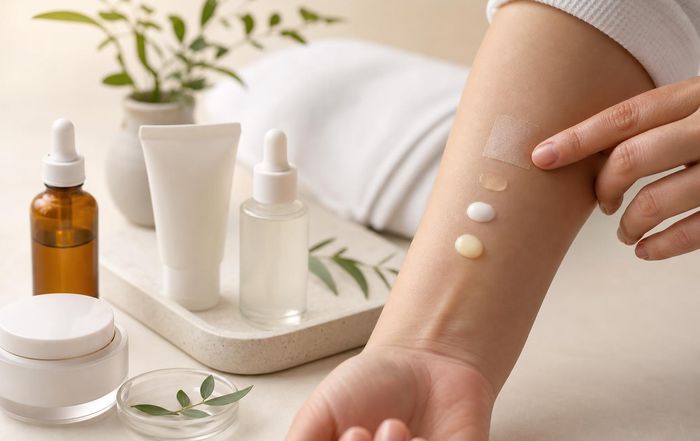
A commonly recommended method is to choose a discreet test site with relatively similar sensitivity to the face. The inner forearm is easy to access and check, but for facial products, many dermatologists suggest behind the ear or along the side of the neck as more realistic test areas. On clean, dry skin, apply a pea-sized amount of the product and leave it in place as you normally would: rinse-off products should be washed off when the label indicates, while leave-on serums or creams should be left to absorb. Avoid applying other new products to the same area at the same time, so you can clearly attribute any reaction.
Observing the skin over time is crucial. A single quick check after 10 minutes is not enough. Many reactions, particularly delayed-type allergies, take 24-72 hours to appear. Reapplying the product once or twice a day to the same small area for several days-often up to a week-is a more realistic test. If you notice persistent redness, itching, swelling, small bumps, or burning that worsens with repeated use, it is a sign to stop and avoid using that product more widely. Mild, transient tingling can be normal with some actives, like low-strength acids, but ongoing discomfort or visible inflammation should not be ignored.
For people constructing a completely new routine-cleanser, moisturizer, sunscreen, and one or two actives-it can help to patch test each product in sequence rather than all at once. This staggered approach takes longer, but it dramatically reduces confusion later. Our broader health and lifestyle sections often emphasize this slow, mindful approach in other areas of self-care as well, from fitness to mindfulness practices.
Understanding the ingredients: where problems often start
Patch testing becomes more meaningful when combined with a basic understanding of cosmetic ingredients. Many people notice that their skin reacts to "something" but do not know where to start looking. Learning to read ingredient lists can help you identify patterns, especially if similar reactions occur with different products over time.
Fragrances are among the most common culprits in cosmetic allergy. This includes both synthetic fragrances and many natural essential oils. Regulatory bodies such as the European Commission require certain fragrance allergens to be listed on product labels when present above low thresholds, reflecting their known sensitizing potential (https://ec.europa.eu/). If you react to fragranced products, choosing fragrance-free options and patch testing them carefully can make a significant difference.
Preservatives are another frequent trigger. Compounds like methylisothiazolinone (MI), methylchloroisothiazolinone (MCI), parabens, and formaldehyde-releasers have been widely studied in relation to contact dermatitis. While preservatives are essential for preventing microbial growth and keeping products safe, some individuals develop sensitivity to specific types. Resources from the U.S. Food and Drug Administration explain how cosmetics are regulated and what consumers can expect on labels (https://www.fda.gov/).
Active ingredients also matter. Retinoids, AHAs (such as glycolic and lactic acid), BHAs (like salicylic acid), and strong vitamin C formulations can all cause irritation, particularly when introduced at high strength or combined aggressively. In some cases, gradual introduction and barrier-supportive moisturizers can improve tolerance, but patch testing helps determine whether a given product is simply too strong for your skin at its current condition. For readers interested in broader innovation in skincare actives and how they fit into overall wellness, our innovation and news sections often explore new research and product trends.
When an at-home patch test is not enough
Although home patch testing is useful, it has clear limits. A small negative test does not guarantee you will never react to a product, particularly with long-term use or when combined with other actives. Some allergies only become apparent after months or years of exposure, while others may only appear when the skin barrier is compromised by illness, over-exfoliation, or environmental stress. Global health organizations such as the World Health Organization note that skin conditions are among the most common reasons for healthcare visits worldwide, underlining how complex and individual skin responses can be (https://www.who.int/).
Professional patch testing is recommended in several situations. If you have recurrent rashes on the face, eyelids, neck, or hands that do not fully resolve with simple changes, or if over-the-counter products consistently cause burning or redness, a dermatologist can help identify specific allergens. They use standardized allergen panels-covering common triggers in cosmetics, metals, fragrances, and occupational exposures-to pinpoint what your immune system is reacting to. In some cases, they may also add "as is" testing of your own products, applying small amounts under patches in a controlled way.
Medical attention is also urgent if you experience severe swelling, blistering, widespread hives, or difficulty breathing after using a product. These symptoms can indicate more serious allergic reactions and should not be managed at home. National health services, such as the UK National Health Service (https://www.nhs.uk/), provide clear guidance on when to seek emergency care for allergic symptoms.
For those who travel frequently or work across different climates, it is worth remembering that environmental factors-humidity, pollution, UV exposure-can change how skin responds to ingredients. A product that is well tolerated in one country may cause irritation in another if the skin barrier is already stressed by cold, dryness, or intense sun. Incorporating patch testing into travel skincare planning, alongside broader travel and world wellbeing considerations, can help keep routines adaptable and safe.
Making patch testing part of a mindful skincare practice
Beyond its practical role in preventing rashes, patch testing can be viewed as a small act of mindfulness in daily life. Rather than rushing into an entire new routine because of trends on social media or persuasive marketing, taking a few days to test products encourages a more attentive relationship with your skin. This mindset aligns with broader mindfulness approaches-observing without judgment, noticing subtle signals, and making adjustments based on experience rather than impulse.
Building this habit can also reduce decision fatigue. Once you become accustomed to patch testing, it becomes a standard step: new serum, new sunscreen, new cleanser-test first, then integrate slowly. Over time, you may also recognize patterns in what your skin likes and dislikes, from certain types of emulsifiers to specific plant extracts. This personal "skin literacy" complements information from dermatology organizations such as the American Academy of Dermatology or DermNet New Zealand, and can help you navigate an increasingly crowded beauty and wellness market more confidently.
For smart people interested in expanding this mindful approach beyond skincare, related ideas appear frequently in our 100% unique mindfulness, wellness, and environment journalism, where the focus often shifts from quick fixes to long-term, sustainable habits.
Bringing it all together
Patch testing is a small step with outsized benefits. It helps prevent painful or embarrassing reactions, protects the skin barrier, and offers early clues about possible allergies, all while supporting a slower, more thoughtful approach to self-care. At-home patch tests are not a substitute for professional diagnosis, but when combined with ingredient awareness and medical advice where needed, they form a practical first line of defense in any new skincare routine.
In a landscape where new products and trends appear almost daily, the quiet discipline of patch testing offers something different: time to listen to your skin before asking it to adapt. For anyone building a routine that supports not just appearance but overall wellbeing, that pause is often where real skincare wisdom begins.