

Active Holidays in Italy: Walking Beyond Major Cities
Italy is often imagined through the lens of Rome's ruins, Florence's galleries, and Venice's canals. Yet for active travellers, the country becomes something different when experienced on foot, away from its most crowded piazzas. Ancient pilgrimage trails, vineyard-lined ridges, coastal footpaths, and high Alpine traverses reveal a slower, more grounded Italy where wellness, culture, and landscape merge. Walking holidays here are not just about exercise; they are a way to reset rhythms, reconnect with nature, and experience local life at human speed.
For travellers interested in wellness, fitness, and mindful living, Italy offers a rare combination: varied terrain, rich food culture, and a network of historic paths that link small communities rather than only the headline cities. From the Dolomites to Sicily, it is possible to design multi-day trips that prioritize movement, rest, and simple pleasures-without needing to be an elite hiker. This guide explores some of the country's most rewarding walking regions beyond the big urban centres, how to approach them safely and sustainably, and how to make an active Italian holiday genuinely restorative.
Along the way, walking-focused itineraries can be combined with broader wellness experiences, whether that means thermal spas, mindful retreats, or simply slowing down with local food and wine. Those interested in complementing an active itinerary with more lifestyle and wellbeing ideas may also find useful context in our sections on wellness, travel, and lifestyle.
Why choose a walking holiday in Italy?
Walking holidays in Italy sit at the intersection of physical activity, cultural immersion, and mindful travel. On a practical level, the country has an unusually dense network of footpaths, from Alpine routes mapped by the Club Alpino Italiano to revived medieval pilgrimage trails. This infrastructure, combined with a mature tourism sector, makes it relatively easy to plan self-guided routes or join small-group walking tours. For wellness-oriented travellers, the benefits are twofold: moderate daily exercise that supports cardiovascular fitness and mental health, and the opportunity to disconnect from fast-paced urban life. Organizations such as the World Health Organization highlight walking as a key component of regular physical activity, which can reduce the risk of chronic disease and support mental wellbeing, and Italy's landscapes offer a scenic way to integrate those recommendations into a holiday.
Culturally, walking slows everything down. Instead of rushing between sights, travellers arrive at hilltop towns at dusk, pass through vineyards while workers prune vines, or encounter shepherds in mountain pastures. This mode of travel often supports smaller, family-run accommodation and restaurants, spreading tourism income more evenly beyond major hubs. It also tends to be lower impact than car-based itineraries, especially when combined with Italy's extensive rail network. For visitors concerned with sustainability, walking holidays can align with guidance from organizations such as the United Nations World Tourism Organization on more responsible forms of travel that respect local communities and environments.
From a practical wellness perspective, walking holidays can be tailored to different fitness levels. Regions like Tuscany and Umbria offer rolling hills and short town-to-town stages, while the Dolomites and Apennines provide more demanding routes for experienced hikers. For those balancing desk-based jobs or high stress, the combination of moderate daily exertion, natural scenery, and digital disconnection can function as a form of active retreat. Readers who want to integrate broader health strategies into their trip planning may also find inspiration in our health and fitness coverage, where physical activity, recovery, and lifestyle choices are explored in more depth.
Classic vineyard and hill walks: Tuscany and Umbria
Tuscany and Umbria remain among the most popular regions for walking holidays, yet many of their most rewarding routes lie well beyond Florence, Pisa, or Siena's urban cores. In Tuscany, the Via Francigena, an ancient pilgrimage route from Canterbury to Rome, passes through hilltop towns such as San Gimignano and Monteriggioni, threading together cypress-lined lanes, vineyards, and medieval walls. Sections of this route can be tackled over three to seven days, with daily distances adapted to fitness levels. The European Association of Via Francigena Ways and regional tourism offices provide detailed mapping and logistical information, while guidebook publishers such as Cicerone and Bradt offer stage-by-stage descriptions that help walkers assess difficulty and terrain.
Beyond the Francigena, the Chianti region between Florence and Siena offers shorter loop walks through vineyards and olive groves, often starting and ending in small villages. These walks are well-suited to travellers who prefer a single base-perhaps an agriturismo or rural guesthouse-from which to explore different routes each day. This style of travel can support a balanced wellness routine: walking in the morning, rest or cultural visits in the afternoon, and slow meals featuring local produce in the evening. For those interested in the environmental side of rural tourism, resources such as Slow Food and FAO provide background on sustainable agriculture and traditional food systems that underpin many of these landscapes.
Umbria, sometimes called Italy's "green heart," offers a slightly quieter alternative with similar terrain. Towns such as Spello, Bevagna, and Montefalco can be linked via country lanes and woodland paths, with views over the Valle Umbra and the Monti Sibillini in the distance. The Cammino di Francesco, tracing routes linked to Saint Francis of Assisi, is one of several spiritual and cultural trails that cut through the region. While some pilgrims walk for religious reasons, many approach these paths as opportunities for contemplation and digital detox, aligning naturally with mindfulness practices. Readers exploring meditation, yoga, or stress reduction may find it meaningful to pair a walking trip here with ideas from our mindfulness section.
Alpine and Dolomite trekking: high-altitude wellness
Northern Italy's mountain regions offer a very different kind of walking holiday, one that combines high-altitude exertion with dramatic landscapes and, in many valleys, a strong spa culture. The Dolomites, recognized as a UNESCO World Heritage site, are particularly well-known for their network of rifugi (mountain huts) linked by well-marked trails. Multi-day hut-to-hut routes such as segments of the Alta Via 1 or Alta Via 2 allow walkers to cross passes, traverse balcony paths, and descend into flower-filled meadows, often with the option of shorter variants for less experienced hikers. The Italian Alpine Club and regional tourism boards in South Tyrol, Trentino, and Belluno maintain detailed information on trail conditions, seasonal closures, and safety guidelines.
From a health perspective, walking at moderate altitude can improve cardiovascular fitness and, for some people, sleep quality, though it also requires attention to hydration, sun protection, and gradual acclimatization. Public health bodies such as the Centers for Disease Control and Prevention and NHS provide general guidance on altitude and outdoor safety that remains relevant here: understanding weather patterns, carrying appropriate layers, and knowing basic first aid. In the Dolomites, many rifugi offer hearty but simple meals, communal dining, and limited connectivity, which together encourage social interaction and reduced screen time-elements that can support mental wellbeing.
Beyond the Dolomites, the western Alps around Aosta and the Gran Paradiso National Park provide wilder-feeling routes, including multi-day circuits where walkers may spot ibex, chamois, or marmots. The Gran Paradiso National Park authority and Italian Ministry for the Environment offer conservation-focused information to help visitors understand how to minimize their impact on fragile alpine ecosystems. For travellers who see wellness as extending beyond personal health to environmental stewardship, these regions can be a powerful reminder of interconnectedness: glacial retreat, changing snow patterns, and biodiversity shifts are all visible signs of climate change. Integrating gentle reflection on these themes into a walking holiday can deepen its meaning without turning it into a lecture.
Coastal paths: Liguria, Amalfi, and lesser-known shores
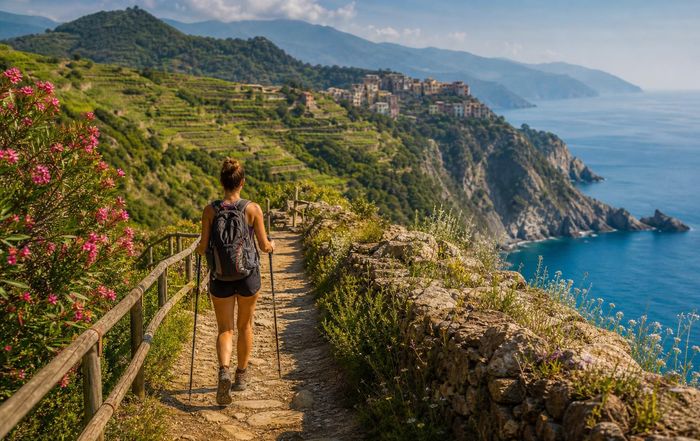
Italy's coastline is famous, but many visitors experience it primarily from roads, ferries, or crowded beaches. Walking changes that perspective. Liguria's Cinque Terre is the most famous example, with cliffside paths linking pastel villages, but in recent years authorities have introduced stricter trail management and occasional closures to protect against erosion and overcrowding. The Cinque Terre National Park and Italian Civil Protection Department publish updates and safety information, emphasizing that some paths are more demanding than they appear in photos. For travellers committed to low-impact, wellness-focused holidays, it can be worth looking beyond the busiest stretches.
The Riviera di Levante and Portofino area, for example, offer quieter coastal walks through Mediterranean scrub and pine forest, with descents to small coves and fishing hamlets. Further south, the Amalfi Coast features routes such as the Sentiero degli Dei (Path of the Gods), which climbs high above the sea between Bomerano and Nocelle. While the views are extraordinary, the path includes steep sections and exposed stretches, making appropriate footwear, sun protection, and water essential. Local authorities and organizations such as the Italian National Tourist Board encourage visitors to respect waymarking, avoid shortcuts that damage vegetation, and consider off-peak seasons to reduce crowding.
For those seeking something more off-radar, coastal paths in regions like Cilento (south of Amalfi), parts of Sardinia, and western Sicily can offer long, contemplative days with fewer people. Here, walking holidays often intersect with marine protected areas and rural communities that depend on small-scale fishing and agriculture. International bodies like WWF and IUCN highlight the importance of such landscapes for biodiversity and coastal resilience, and travellers can support this by choosing local guides, respecting marked paths, and avoiding disturbance to wildlife. Combining sea swims with daily walks can create a powerful wellness rhythm: exertion, cold-water immersion, and rest.
Pilgrimage and long-distance routes: slow journeys south
Over the past decade, Italy has seen a revival of interest in long-distance pilgrimage and walking routes that connect small communities across the peninsula. While the Via Francigena is the best known internationally, a growing network of "cammini" offers alternatives that often bypass major cities entirely. The Via degli Dei (Way of the Gods) between Bologna and Florence, for example, follows ancient Roman roads and forest tracks across the Apennines, linking villages where walkers can stay in simple guesthouses or agriturismi. The route's official association and local municipalities provide mapping and accommodation lists, while hiking organizations such as CAI emphasize the importance of preparedness, especially in shoulder seasons when weather can change quickly.
Further south, the Cammino Materano and Via Lauretana are among several routes that connect regions like Basilicata, Puglia, and Marche. These paths pass through olive groves, wheat fields, and whitewashed hill towns, often with fewer services than their northern counterparts. For walkers who see their holiday as a form of extended retreat or life reset, these quieter routes can be particularly appealing. They encourage a simple daily structure-walk, eat, rest-that aligns with many mindfulness and stress-reduction approaches. Public health institutions such as Harvard T.H. Chan School of Public Health and Mayo Clinic have highlighted the mental health benefits of regular walking, including improved mood, reduced anxiety, and better sleep, and long-distance routes allow these effects to accumulate over days or weeks.
However, such journeys require realistic planning. Daily distances, cumulative elevation gain, and the availability of accommodation need to be assessed carefully, especially in regions with limited public transport. Local associations and regional tourism boards increasingly provide GPX tracks and stage suggestions, but walkers should still carry paper maps, understand basic navigation, and have contingency plans. For those considering combining a long-distance route with a career break or life transition, our jobs and business sections sometimes explore broader themes of work-life balance and sabbaticals that can complement this kind of travel.
Designing a walking itinerary aligned with wellness
Creating a walking holiday that supports both physical fitness and mental wellbeing involves more than choosing a scenic region. It starts with an honest assessment of current activity levels, any injuries or health conditions, and what kind of rest and stimulation feel restorative. Health authorities such as the World Health Organization and American College of Sports Medicine provide general guidelines suggesting that most adults benefit from at least 150 minutes of moderate-intensity aerobic activity per week, with additional strength work. A walking holiday can easily exceed this, which is positive for many people but may require gradual training beforehand, especially if daily stages involve significant hills or rough terrain.
When planning, it can be useful to think in terms of rhythm rather than just distance. Alternating longer and shorter days, building in one or two rest or "buffer" days, and choosing accommodation that allows for stretching, quiet reading, or simple bodywork (such as self-massage or using a travel foam roller) can all support recovery. Readers interested in more structured recovery approaches, including sports massage or spa-based relaxation, may find additional ideas in our massage and wellness coverage. Nutrition also matters: while Italian food culture is often associated with indulgence, rural regions offer abundant seasonal vegetables, legumes, whole grains, and olive oil, which can support sustained energy for daily walking when balanced with local cheeses, cured meats, or desserts.
Mental framing is equally important. Approaching the trip as a performance challenge can be motivating, but it may also introduce pressure that undermines relaxation. Many walkers find it more helpful to treat the journey as an experiment in slower living: noticing how the body feels at different times of day, paying attention to small details in the landscape, and allowing conversations with locals to shape the experience. Simple mindfulness practices-such as walking for a few minutes in silence focusing on breath and footfall, or taking a short pause at viewpoints without reaching for a camera-can deepen the sense of presence. For those exploring broader mental health or stress topics, our mindfulness and environment sections offer perspectives on how time in nature supports psychological resilience.
Safety, seasonality, and environmental impact
Walking holidays are generally low-risk compared with technical mountaineering or adventure sports, but they are not risk-free. Heatwaves, sudden storms, landslides, and wildfires have become more frequent in parts of Italy, particularly in summer. Agencies such as Protezione Civile (Italy's Civil Protection Department), MeteoAM (the Italian Air Force Weather Service), and European initiatives like Copernicus provide weather and hazard updates that walkers should check regularly, especially in mountainous or fire-prone regions. International health bodies including the World Meteorological Organization and European Environment Agency have documented increasing climate-related extremes, which means routes described in older guidebooks may now be more exposed to heat or storms at certain times of year.
Seasonality is therefore a key planning factor. Spring and autumn are often the most comfortable seasons for low- and mid-altitude walks, with milder temperatures and fewer crowds. High mountain routes may still hold snow in early summer and can see early snowfalls in autumn, making local advice and up-to-date information from CAI sections or park authorities essential. In coastal areas, late spring and early autumn can offer warm seas without peak-season density. Walking in July or August is possible in some regions but requires early starts, careful hydration, and sun protection; in extreme heat, shortening stages or switching to higher, breezier routes may be necessary.
Environmental impact is another consideration. While walking is inherently low-carbon, the cumulative effect of thousands of visitors on narrow trails can be significant. Organizations such as Leave No Trace and WWF promote simple principles-staying on marked paths, carrying out all waste, avoiding disturbance of wildlife, and respecting local rules-that are particularly relevant in fragile coastal or alpine ecosystems. Choosing locally owned accommodation and services, travelling by train where possible, and avoiding single-use plastics can further reduce impact. For readers who see wellness as including planetary health, these choices can be part of a broader lifestyle pattern, not just a holiday exception.
Integrating walking holidays into a broader lifestyle
For many travellers, an active holiday in Italy is not just a one-off adventure but a catalyst for broader changes. Spending a week or more walking daily can recalibrate what "normal" activity feels like, making it easier to maintain regular walking, stretching, or strength work at home. Public health agencies such as Public Health England (now part of the UK Health Security Agency and Office for Health Improvement and Disparities) and Health Canada have long encouraged integrating walking into everyday routines-commuting on foot, taking walking meetings, or using stairs instead of lifts-and a positive experience on the trail can provide the emotional motivation to make these shifts.
At the same time, walking holidays can influence how people think about work, consumption, and time. Living for a short period with only what fits in a backpack, moving at a human pace, and relying on small businesses for food and shelter can shift perspectives on what is essential. Some travellers return home wanting to simplify their schedules, re-evaluate their relationship with technology, or prioritize experiences over possessions. These themes intersect with other lifestyle and business questions we explore in areas such as lifestyle, business, and innovation, where changes in work patterns, digital tools, and wellbeing cultures are reshaping how people organize their lives.
For those who find walking particularly restorative, Italy's variety makes it possible to return repeatedly without repeating the same experience. One year might focus on Dolomite traverses, another on Tuscan vineyards, another on coastal paths in Sardinia or long-distance routes in the south. Over time, these journeys can form a kind of personal map, threaded not only through geography but through different stages of life, each walk associated with its own questions, decisions, and reflections.
Stepping into Italy on foot
Choosing to explore Italy on foot, beyond the major cities, is ultimately a decision about pace and attention. It means trading some of the convenience and spectacle of big urban centres for the slower rewards of small towns, rural landscapes, and mountain passes. For wellness-minded travellers, that trade often feels worthwhile: daily movement, time outdoors, and simple routines can provide a reset that purely sightseeing-focused trips rarely match. With thoughtful planning, respect for local environments, and a willingness to adjust expectations to conditions on the ground, walking holidays in Italy can be both physically invigorating and quietly transformative.
Whether the goal is a week of vineyard paths and village trattorie, a high-altitude traverse between rifugi, or a month-long pilgrimage across the peninsula, Italy's trails offer a way to experience the country more fully. They invite visitors to listen to their bodies, notice their surroundings, and engage with communities that lie far from the usual tourist circuits. For those ready to move beyond the piazza and onto the path, Italy remains one of the world's most rewarding destinations for active, mindful travel.