

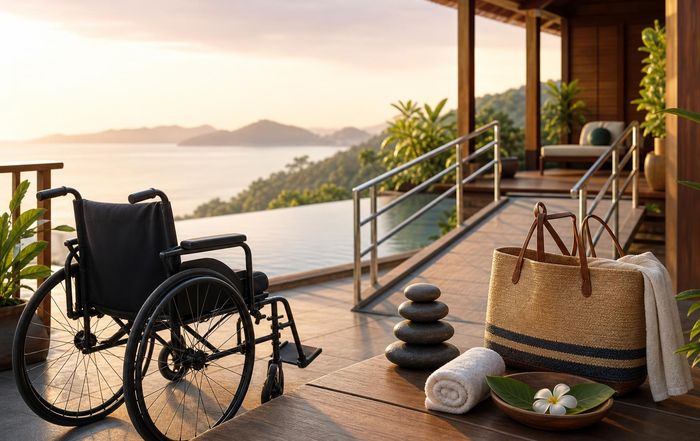
Accessible Wellness Travel: Key Questions to Ask Before You Book
Planning a wellness getaway can be deeply restorative, but for travelers with disabilities, chronic illnesses, or sensory needs, the experience often hinges on one thing: how accurately accessibility is understood and delivered. "Accessible" can mean very different things depending on who you ask, and glossy marketing language rarely captures the practical realities of navigating a spa, retreat center, thermal baths, or eco-resort with a mobility aid, medical device, or neurodivergent brain. To make wellness travel genuinely inclusive, it helps to move beyond broad labels and ask specific, concrete questions before paying deposits or booking non-refundable flights.
This guide focuses on the questions to ask hotels, retreats, tour operators, and wellness centers before you commit, so you can better match your needs with what is actually available on the ground. It applies whether someone uses a wheelchair or scooter, lives with low vision or hearing loss, experiences chronic pain, fatigue, or anxiety, or simply needs quieter, lower-stimulus environments to feel well. While laws in many countries require certain accessibility standards, those baselines are not always met in practice, and they often do not cover the full spectrum of disability or long-term health conditions. A proactive, detailed approach to pre-trip planning can make the difference between a nourishing break and a stressful, exclusionary experience.
For new and old readers exploring broader lifestyle changes alongside travel, our pages on wellness, mindfulness, and lifestyle provide additional context on building sustainable wellbeing habits at home and away.
Start with clarity: your needs, their definitions
Before contacting any property or wellness operator, it is helpful to define your own non-negotiables and "nice-to-have" features. Accessibility is not one-size-fits-all, and two wheelchair users, for example, may have very different requirements depending on transfer ability, chair dimensions, or support needs. Writing down what you need in everyday terms-such as "I must be able to roll into the bathroom and close the door behind me" or "I need to refrigerate medication and access it independently at night"-can make conversations with staff clearer and easier to document by email.
At the same time, the word "accessible" is often used loosely in tourism. Some hotels call a room accessible because it is on a lower floor, even if there are steps at the entrance, narrow doorways, or a shower over a bathtub. International standards such as the Americans with Disabilities Act (ADA) in the United States, the Equality Act in the United Kingdom, and the European Accessibility Act set minimum requirements in various regions, but implementation varies widely. Organizations like the World Health Organization and United Nations have emphasized that accessibility is a core part of the right to health, yet travelers frequently report inconsistent experiences. When researching, it can be useful to check official tourism and disability resources from bodies such as the World Tourism Organization, WHO, U.S. Department of Transportation, or national equality and disability agencies in your destination country, but always pair this with direct communication with your chosen property.
Questions about the property's overall accessibility
The first layer of inquiry focuses on whether you can comfortably enter, move around, and use key facilities such as reception, dining areas, pools, and wellness spaces. Phone calls can be revealing, but always follow up in writing so that details are documented.
Useful questions include:
Ask how you get from drop-off or parking to the main entrance. Are there step-free routes from accessible parking bays or public transport stops to the lobby, and if so, are they clearly signposted and well lit at night? Clarify whether there are ramps, lifts, or platform lifts where there are stairs, and ask about gradients or steps that might not be obvious from promotional photos. For travelers using mobility aids, ask directly whether all public areas-reception, restaurants, bars, spa, gym, gardens, and pool decks-are reachable without steps, and whether doorways and corridors are wide enough for your device. This is particularly important in historic properties or boutique retreats, where charm can come at the expense of accessibility.
It is also worth asking how the property handles power outages or lift maintenance, especially in regions where electricity supply is less stable or in multi-storey resorts where wellness facilities are on upper floors. If you use an electric wheelchair, ventilator, CPAP machine, or other medical equipment, inquire about backup power options and whether the hotel can prioritize your room on a generator circuit. In some countries, disability rights organizations and tourism boards-such as VisitBritain, Tourism Australia, or Canada's national parks system-offer guidance on what to expect from accessible accommodation; their main websites at visitbritain.com, australia.com, and pc.gc.ca can be useful starting points, though you will still need property-specific details.
In-room accessibility: beyond "yes, we have an accessible room"
Rooms labeled as "accessible" vary dramatically, so detailed questions are essential. Many travelers find it helpful to request photos or even short videos of the specific room and bathroom they will be assigned, not just generic images of "an accessible room type." When you ask, specify that you want to see the entrance, bed area, closet, bathroom, and any steps or thresholds.
Clarify the exact width of the room and bathroom doors, whether there are thresholds, and whether a wheelchair or walker can turn around inside. Ask about bed height and whether there is space underneath for a hoist, if you use one. Confirm the type of shower (roll-in with no lip, or a shower over a tub), the presence and placement of grab bars, and whether a sturdy shower seat is built in or can be provided. For travelers with limited grip or strength, details like lever-style door handles and taps, rather than knobs, can make a big difference. If you need to transfer from a wheelchair to the toilet or shower from a particular side, specify this and ask for confirmation that the layout suits your transfer direction.
Other in-room features can also support wellness. Ask whether the hotel can provide a mini-fridge for medication, blackout curtains for better sleep, or adjustable lighting to reduce sensory overload. Travelers with hearing loss may need visual alarms, vibrating alarm clocks, or captioned TV; those with low vision might prioritize good lighting, high-contrast décor, and large-print information materials. If you are planning a longer stay as part of a health or recovery journey, it may be worth exploring serviced apartments or wellness residences that offer kitchenettes and laundry facilities, which can support more independent living and dietary needs. For broader health considerations that extend beyond the room, our health and lifestyle sections discuss how environment shapes daily wellbeing.
Access to spa, pools, and thermal or hydrotherapy facilities
For many people, the spa or thermal area is the heart of a wellness trip, but it is also where accessibility often falls short. Pools without lifts, slippery surfaces, narrow changing rooms, and inaccessible saunas can exclude travelers who might benefit most from hydrotherapy, relaxation, or pain relief. Because regulations differ between countries-and sometimes do not apply to smaller retreats-specific questions are vital.
Ask whether there is a pool lift, sloped entry, or zero-entry "beach" access into pools, hot tubs, and thermal baths, and whether staff are trained and available to assist with transfers if needed. Clarify if the lift is regularly maintained and always available during opening hours. For saunas, steam rooms, and hammams, inquire about step-free access, bench heights, and whether temperature can be adjusted or if there are quieter, less intense heat options, which may be important for people with cardiovascular conditions or heat sensitivity. If you use a mobility aid, ask where it can be safely stored while you are in water and whether the route between changing rooms and pools is non-slip and wide enough.
Changing facilities deserve special attention. Does the spa have private, accessible changing rooms with adult-sized changing benches, grab rails, and roll-in showers? Are lockers reachable from a seated position? Some wellness centers also offer accessible massage tables that can be lowered, widened, or have removable arms, which can make bodywork more feasible for people with limited mobility. If massage or body treatments are a key reason for your trip, it may be helpful to review additional information on massage and wellness, then ask providers how they adapt techniques for chronic pain, joint conditions, or sensory differences.
Program design: are activities and classes truly inclusive?
Many wellness retreats build their value around structured programs: yoga, meditation, hiking, breathwork, fitness classes, or workshops on stress, nutrition, or sleep. However, these schedules are often designed around assumed levels of mobility, stamina, and sensory tolerance. When assessing a program, look beyond whether there is an accessible room and ask whether the core experiences themselves can be adapted or whether alternative options are available.
Start by requesting a sample daily schedule and asking which activities are suitable for different mobility and energy levels. For yoga or movement classes, inquire whether instructors are trained in chair-based or adaptive practices and whether props such as bolsters, straps, and blocks are provided. For meditation or mindfulness sessions, ask if alternatives exist for people who cannot sit cross-legged on the floor or who may find long silent sits difficult due to pain or neurodivergence. Organizations like Yoga Alliance and Mindful magazine, accessible at yogaalliance.org and mindful.org, offer guidance on inclusive practice; it is reasonable to expect a serious wellness provider to be familiar with at least some of these principles.
Outdoor activities require particular scrutiny. If the retreat includes hikes, beach walks, or forest bathing, ask about terrain, distances, elevation changes, and whether all-terrain wheelchairs or alternative transport can be arranged. Clarify whether there are shorter, flatter routes or seated options for participants who cannot manage long walks. If you are joining a group retreat, it can be worth asking whether the program can be customized for you or whether the provider has previously hosted guests with similar needs. For those integrating wellness travel with ongoing fitness goals, our fitness coverage explores adaptive training approaches that may help you frame questions for instructors and guides.
Medical, dietary, and safety considerations
Wellness travel often intersects with health conditions, whether someone is recovering from surgery, managing a chronic illness, or living with mental health challenges. It is important to distinguish between wellness services and medical care: most retreats are not licensed medical facilities, and staff may not be trained to respond to emergencies beyond basic first aid. Clarifying what support is-and is not-available allows you to plan responsibly.
Ask whether there is a doctor, nurse, or other health professional on site or on call, and what response times you might expect in an emergency. Inquire about the nearest hospital or clinic, how far it is, and how you would get there, particularly in rural or island locations. For international travel, check official health advice from bodies such as the Centers for Disease Control and Prevention, European Centre for Disease Prevention and Control, or your own country's foreign travel advisory service before booking. If you travel with prescription medications, confirm that your room has secure storage and, if needed, refrigeration, and ask whether the property can assist with receiving medical deliveries or storing larger items like dialysis supplies.
Diet is another major dimension of wellness travel. Many retreats emphasize plant-based, detox, or fasting programs, which may or may not be appropriate for people with diabetes, gastrointestinal conditions, eating disorders, allergies, or specific cultural or religious dietary needs. Ask to see sample menus, then speak directly with the kitchen or nutrition team about your requirements. Clarify whether they can handle cross-contamination risks for severe allergies and whether alternative meals can be prepared if the standard program conflicts with your medical advice. Official guidance from agencies like the U.S. Food and Drug Administration or Food Standards Agency can help you frame questions about allergens and food safety; however, you still need explicit assurances from the property itself.
Insurance is also crucial. Standard travel insurance policies may not automatically cover pre-existing conditions, medical evacuation, or specialized equipment. Disability and health advocacy organizations often recommend checking with insurers that explicitly address accessible travel; resources from groups such as Mobility International USA and national disability councils (for example, miusa.org and un.org) can help you understand typical gaps and questions to ask insurers before booking.
Sensory, cognitive, and mental health accessibility
Discussions of accessible travel often focus on physical access, but wellness environments can be challenging for people with sensory sensitivities, autism, ADHD, PTSD, anxiety, or cognitive impairments. Loud music, crowded classes, strong scents, bright or flashing lights, and unpredictable schedules can all undermine the sense of calm that wellness travel is supposed to foster. Asking about sensory and cognitive accessibility is just as important as asking about ramps and lifts.
Inquire about the general atmosphere of the property: Are communal areas usually quiet or lively? Is loud music played in restaurants, pools, or gyms, and can it be turned down on request? Ask whether the spa uses strong fragrances, incense, or essential oils, and whether fragrance-free treatments or rooms are available. For people with migraine, asthma, or chemical sensitivities, this level of detail can be critical. Organizations such as Autistic Self Advocacy Network and Autism Europe, accessible via autisticadvocacy.org and autismeurope.org, offer broader guidance on sensory-friendly environments that may help you articulate your needs.
Routine and predictability are also important. Ask whether schedules are clearly communicated in advance and whether staff can provide written summaries of activities, menus, and any changes. For travelers who experience cognitive fatigue or memory challenges, check whether the property can offer reminders, orientation support, or a point person who understands your situation. If you live with anxiety or trauma, you may want to ask how staff handle situations like crowded check-in times, unexpected room changes, or overbooked activities, and whether there are quiet spaces you can retreat to if you feel overwhelmed. Our mindfulness and wellness coverage explores practices that can help regulate stress; combining those tools with an environment that respects your sensory thresholds can make wellness travel far more restorative.
Staff training, attitudes, and communication
Even the best physical infrastructure can be undermined by untrained or dismissive staff. Conversely, a property with modest facilities but a genuinely inclusive culture can sometimes adapt creatively and provide a good experience. When you contact a hotel or retreat, pay attention not only to the answers you receive but also to how they are delivered: Are your questions welcomed, or treated as an inconvenience? Are staff willing to check details rather than guessing? Do they acknowledge when they are unsure and offer to follow up?
It can be helpful to ask explicitly whether staff receive disability awareness or accessibility training, how often, and from whom. Some destinations and chains partner with disability organizations or tourism boards to develop training programs; for example, initiatives promoted by UNWTO, European Network for Accessible Tourism, or national tourism authorities aim to raise standards globally. Checking whether a property references such programs or has any form of accessibility statement on its website can provide clues about its commitment. While you should be cautious about relying solely on online reviews, feedback from other disabled travelers on mainstream platforms or specialist communities can also offer insight into staff attitudes and problem-solving approaches.
Clear communication is especially important if you are booking through a third-party platform or tour operator rather than directly with the property. In that case, ask to have your accessibility requirements written into the booking as formal notes and request written confirmation from both the agent and the hotel. If you are joining a group wellness tour, ask the operator how they assess the accessibility of their partner properties and whether they have a process for handling access-related complaints or last-minute changes. This is also a good moment to ask about cancellation policies if accessibility promises are not met on arrival.
Transport, excursions, and the wider destination
A hotel or retreat might be relatively accessible, but the journey there and any excursions can still present barriers. Before booking, consider the entire travel chain: airports, trains or ferries, local taxis, and any side trips such as city tours, nature excursions, or visits to cultural sites. Accessibility standards for transport vary significantly between countries, and while regulators such as the European Commission and U.S. Department of Transportation have issued rules on air and rail travel, enforcement can be inconsistent.
Ask your accommodation whether they can arrange or recommend accessible transfers from the nearest airport or station, specifying whether you need a vehicle with a ramp or lift, securement points, or extra space for mobility aids. For international flights, contact your airline well in advance to request assistance, declare mobility equipment, and confirm procedures for boarding, deplaning, and handling wheelchairs or medical devices. If your wellness program includes excursions, request detailed descriptions of routes, surfaces, gradients, and bathroom availability, and ask whether alternative activities can be provided if an excursion proves inaccessible.
It is also worth researching the general accessibility culture of your destination. Some cities and regions are actively working to become more inclusive, often promoting accessible tourism on official sites like visitbritain.com, australia.com, or national tourism offices. Others may lack infrastructure but still offer supportive community networks or adaptive tour operators. When weighing destinations, consider not only cost and climate but also access to medical care, availability of accessible transport, and the likelihood that communication barriers (such as language or limited disability awareness) will complicate problem-solving on the ground. Our travel and world sections often explore how different regions are adapting to inclusive tourism and wellness trends.
Contracts, documentation, and protecting yourself if things go wrong
Even with thorough questioning, things sometimes go wrong: a promised pool lift is out of order, a "step-free" entrance has a steep ramp without handrails, or an "accessible" bathroom turns out to be unusable. While no amount of paperwork can guarantee a flawless trip, having clear documentation improves your chances of resolving issues or securing refunds.
Whenever possible, summarize your needs in an email and ask the property to confirm in writing which features they can provide. Avoid generic phrasing and instead refer to specific commitments, such as "roll-in shower with no lip," "door width of at least 90 cm," or "pool lift operational during opening hours." Save any photos or videos they send and keep copies of booking confirmations, email exchanges, and accessibility statements. If you used a travel agent or tour operator, ensure that key accessibility elements are written into the contract, not just mentioned verbally.
Travelers may also want to review consumer and disability rights in the country they are visiting. In the European Union, for example, passengers have certain rights under regulations on air and rail travel, and many countries have anti-discrimination laws that apply to accommodation and services. In the United States, the ADA and Air Carrier Access Act provide frameworks for complaints. Information from bodies like the European Commission, U.S. Department of Transportation, and national equality commissions can help you understand your options if accessibility promises are not met. When you return, sharing honest feedback-whether directly with the property, through disability organizations, or via reviews-can help improve experiences for future travelers and encourage wellness providers to take accessibility more seriously.
Making wellness travel genuinely restorative
Accessible wellness travel is not just about checking compliance boxes; it is about creating conditions where people with diverse bodies and minds can rest, heal, and explore without constantly fighting their environment. Asking detailed questions before booking may feel laborious, but it is often the most powerful tool travelers have to align expectations with reality and to signal to the industry that accessibility is a core part of quality, not an optional extra. Over time, as more guests articulate their needs clearly and vote with their bookings, wellness providers may become more proactive in designing inclusive spaces and programs from the outset.
For those planning their next trip, it can be helpful to approach accessibility questions as part of a broader wellness strategy rather than as a separate checklist. Consider how your destination, accommodation, daily routines, and travel logistics interact with your physical, mental, and emotional health. Explore key resources on wellness, travel, mindfulness, and environment to refine what "restorative" means for you personally. Then, when you reach out to potential retreats or hotels, you can frame questions not only around what is accessible, but also around what will genuinely help you feel well.